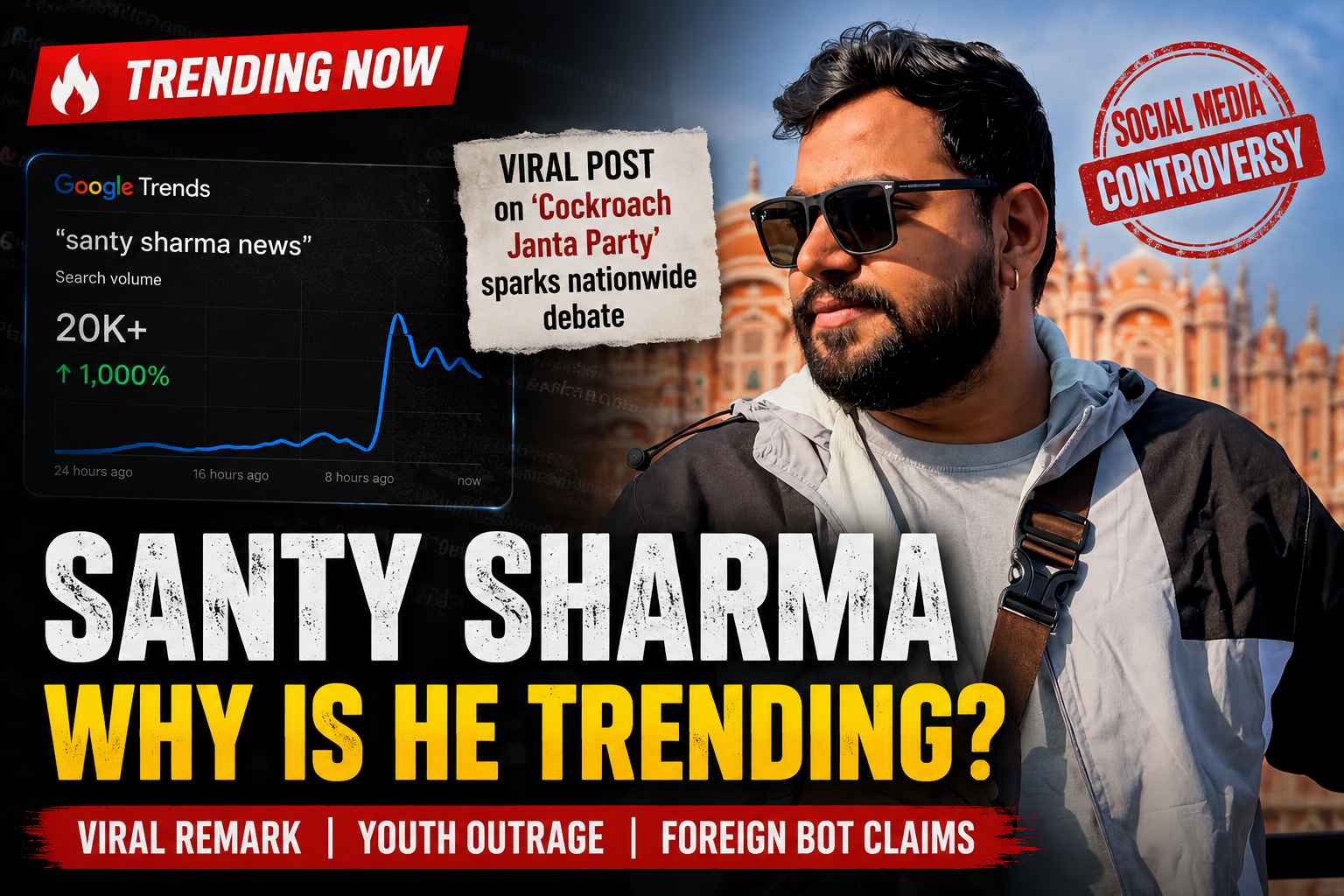
Indian rapper Santy Sharma became a trending topic after his viral comments on the Cockroach Janta Party movement sparked widespread debate across social media platforms.
Why Is Santy Sharma Trending? Viral Post on ‘Cockroach Janta Party’ Explained
Indian rapper Santy Sharma is trending across Google and social media after criticizing the viral “Cockroach Janta Party” movement in a strongly worded online post. The remark sparked sharp reactions overnight, with supporters praising his stance on digital accountability and critics accusing him of dismissing genuine youth concerns about unemployment and inflation.
For users tracking the sudden spike in “Santy Sharma News,” the controversy highlights the increasingly volatile intersection of internet culture, independent music, and online political discourse in India.
Here is a detailed breakdown of what the rapper said, why the controversy erupted, and how social media users reacted.
Why Is Santy Sharma Trending on Google?
According to Google Trends, search interest for “Santy Sharma News” surged sharply within hours, making it one of the fastest-rising topics in India. The spike followed widespread discussion of his comments on the viral Cockroach Janta Party movement across Instagram, YouTube, and X. At the time of writing, “Santy Sharma News” remained among the fastest-rising search terms on Google Trends India.
What Santy Sharma Actually Said
The controversy ignited when Santy Sharma weighed in on the “Cockroach Janta Party” (CJP)—a trending hashtag and meme movement heavily utilized by Indian Gen Z users to express frustration over the economy, academic pressure, and the job market.
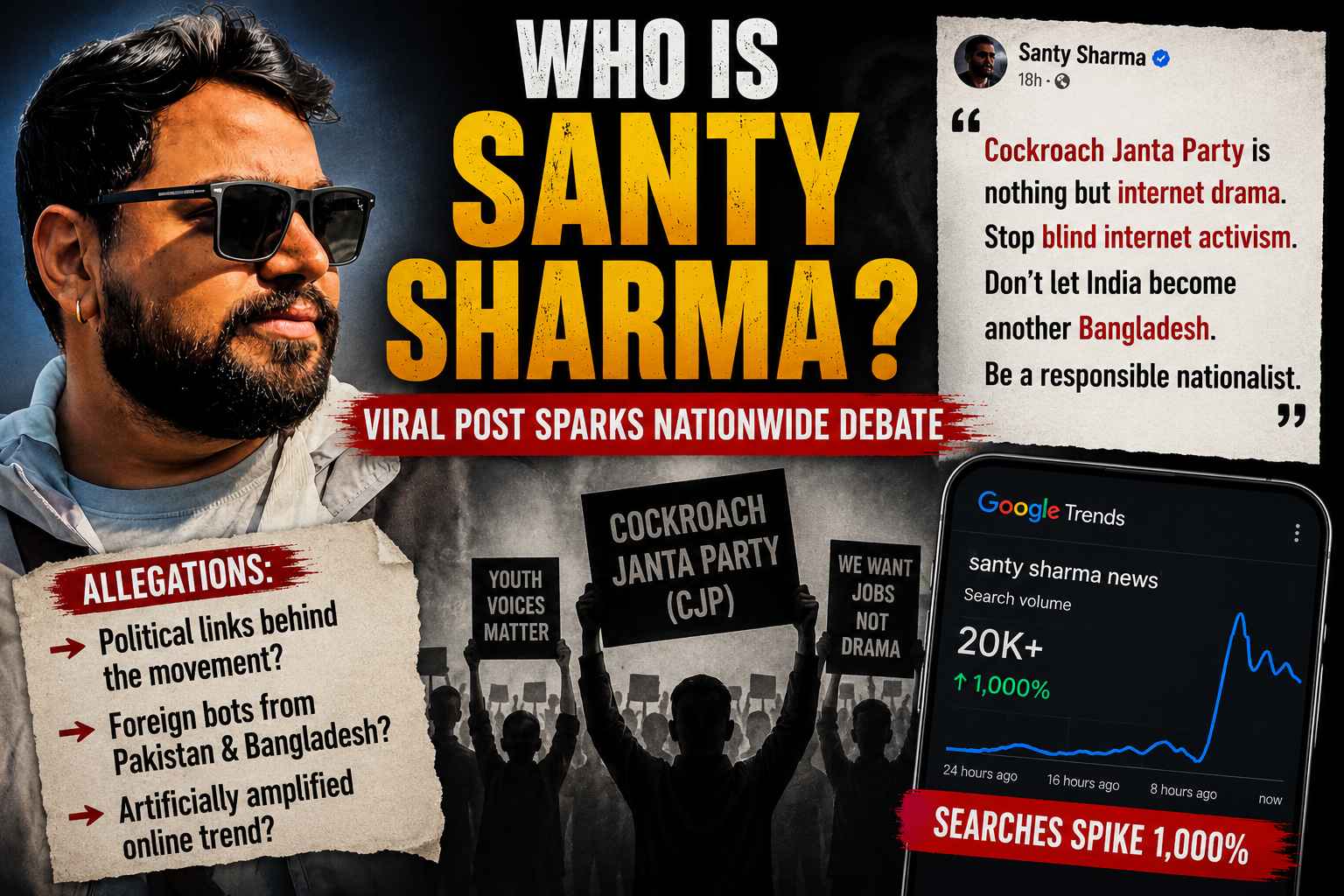
Rather than supporting the movement, Sharma posted a scathing critique. According to a post shared on his verified Instagram account, he explicitly dismissed the CJP trend as manufactured “internet drama” rather than a legitimate grassroots political movement. In his statement, Sharma warned young users against engaging in what he called “blind internet activism.”
The most explosive parts of his post were the specific, unverified allegations he made regarding the movement’s origins and growth. Sharma raised allegations regarding individuals associated with the movement, including claims about possible political connections. These allegations remain unverified.
Additionally, Sharma alleged significant foreign interference. He claimed in his post that the social media engagement boosting the CJP hashtag was not entirely organic, suggesting it was being artificially amplified by suspicious bot networks based in Pakistan and Bangladesh.
He concluded his post by calling for “responsible nationalism,” urging young Indians not to replicate the street protests and political instability recently seen in neighboring nations.
Why People Are Angry
The backlash was swift and intense. The “Cockroach Janta Party” initially started as a satirical internet meme, but over recent weeks, thousands of young Indians adopted the banner to air very real, localized grievances about rising inflation and a highly competitive, stagnant job market.
By labeling the movement as “internet drama” and alleging it was fueled by foreign bots, Sharma struck a nerve with students and job-seekers.
The anger directed at the rapper stems from a feeling of invalidation. For many users participating in the trend, the economic pain is a daily reality. Critics argued that Sharma’s comments risked dismissing legitimate concerns related to unemployment, inflation, and economic uncertainty.
Supporters vs. Critics: The Online Divide
As the post went viral across Instagram and X, public reaction split into two vocal camps, effectively hijacking the trending charts.
The Critics:
Youth groups, progressive commentators, and students have aggressively pushed back against the rapper. Critics argue that regardless of who started the CJP meme, the conversations happening under the hashtag are authentic cries for help from a struggling demographic. They accuse Sharma of being tone-deaf and leveraging a popular political talking point—foreign interference—simply to gain algorithmic clout at the expense of unemployed youth.
The Supporters:
On the other side of the aisle, Sharma has found a robust defense force. Many conservative influencers and nationalist commentators praised him for speaking out against what they view as toxic “outrage culture.” Supporters echoed his concerns, arguing that domestic internet trends are frequently hijacked by bad actors looking to sow discord in India. They commended the rapper for advising the youth to research the organizers behind viral hashtags before joining digital mobs.
Who Is Santy Sharma?
For those unfamiliar with the Indian independent music scene, Santy Sharma (born Ganesh Sharma) is a 29-year-old rapper, singer, and lyricist hailing from Ratlam, Madhya Pradesh. He built a grassroots following in the Desi hip-hop circuit before transitioning to broader mainstream success.
His profile rose significantly after contributing a rap track to the Bollywood film Housefull 5, followed by the release of his solo album, Reborn. Today, he maintains a highly outspoken personality on social media, frequently commenting on cultural issues, which aligns with his latest bold public statements.
Confirmed Facts vs. Unverified Claims
In breaking internet news, distinguishing between what actually happened and what is being alleged is critical. Here is where the situation stands:
Confirmed Facts:
- Santy Sharma authored and published the critical post regarding the CJP movement on his official, verified Instagram account.
- The term “Cockroach Janta Party” and related searches gained significant visibility across social media platforms and Google Trends.
- Sharma is a verified independent artist with a history of prominent social media commentary.
Unverified Claims:
- Foreign Bot Networks: Sharma’s claim that the CJP trend is heavily driven by Pakistani and Bangladeshi bot accounts has not been independently verified by cybersecurity firms or Indian authorities at the time of publication.
- Political Affiliations: The rapper’s allegations that individuals behind the movement have financial or official links to political parties remain strictly unverified. No electoral watchdog or law enforcement agency has confirmed these specific ties.
Frequently Asked Questions (FAQ)
Who is Santy Sharma?
Santy Sharma is a 29-year-old Indian rapper and lyricist from Madhya Pradesh. He gained mainstream attention for his independent hip-hop album Reborn and a rap track featured in the Bollywood film Housefull 5.
What is the Cockroach Janta Party?
The “Cockroach Janta Party” (CJP) is a viral internet trend in India that began as a satirical meme. It has recently been adopted by young social media users to voice concerns over inflation, unemployment, and economic pressures.
Why is Santy Sharma trending today?
He is trending heavily on Google and social media after posting a sharp critique of the CJP movement on his Instagram, triggering a highly polarized debate between supporters of digital accountability and critics defending youth activism.
What did Santy Sharma say?
Sharma dismissed the CJP movement as “internet drama,” warned against “blind internet activism,” and made unverified allegations that the trend was being artificially amplified by foreign bot networks and politically motivated individuals.
What Happens Next?
The lifespan of internet controversies is often short, but the underlying issues they expose tend to linger.
Currently, the debate continues to rage on X and Instagram, with reaction channels and digital commentators dissecting Sharma’s post word for word. It remains to be seen whether the rapper will issue a follow-up statement clarifying his stance on youth unemployment, double down on his foreign interference allegations, or simply let the news cycle move on.
Meanwhile, the “Cockroach Janta Party” hashtag continues to generate heavy traffic, ironically boosted by the very controversy meant to discredit it.
Final Takeaway
The controversy surrounding Santy Sharma highlights how quickly internet culture, politics, and celebrity influence can collide online. While supporters view his comments as a warning against digital manipulation, critics argue that they overlook genuine economic concerns among young people.
As debate continues across social media platforms, the discussion shows how viral trends can rapidly evolve into broader conversations about activism, public discourse, and online influence.
Editorial Note: This article is based on publicly available social media posts and verified reporting available at the time of publication. The specific claims made by Santy Sharma regarding foreign digital interference and the political affiliations of private individuals remain his personal allegations and have not been independently verified by official cyber-security or law enforcement agencies.
About the Author