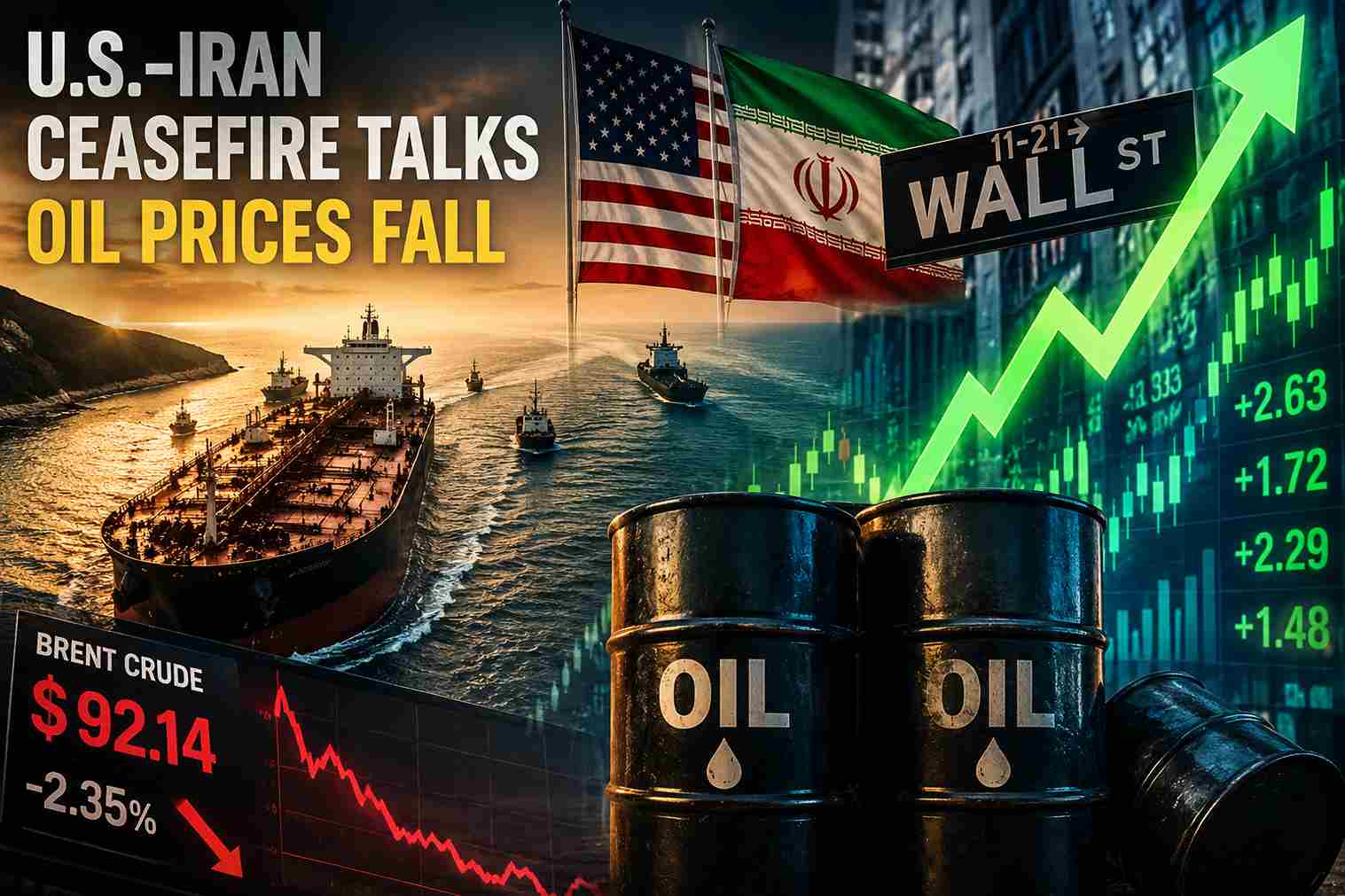
Oil prices decline while Wall Street extends gains as investors react to growing optimism surrounding a potential U.S.-Iran ceasefire agreement and improved energy supply outlook.
Wall Street Rallies While Oil Slides on U.S.-Iran Ceasefire Hopes
Global financial markets are experiencing a significant realignment as investors closely monitor advanced diplomatic negotiations in the Middle East. Multiple reports indicate that U.S. and Iranian negotiators have reached a preliminary framework for a potential 60-day ceasefire extension, though final political approval remains pending. The mere prospect of de-escalation has stripped a notable geopolitical risk premium from crude oil and propelled U.S. stock indices to fresh monthly highs.
For B2B leaders, corporate treasurers, and supply chain executives, this sudden volatility underscores the necessity of agile operational planning. Understanding the macroeconomic ripple effects of this development is critical for adjusting procurement budgets, updating [INSERT_INTERNAL_LINK_HERE] and refining upcoming revenue forecasts to protect corporate margins.
The Core Catalyst: De-escalation and the Strait of Hormuz
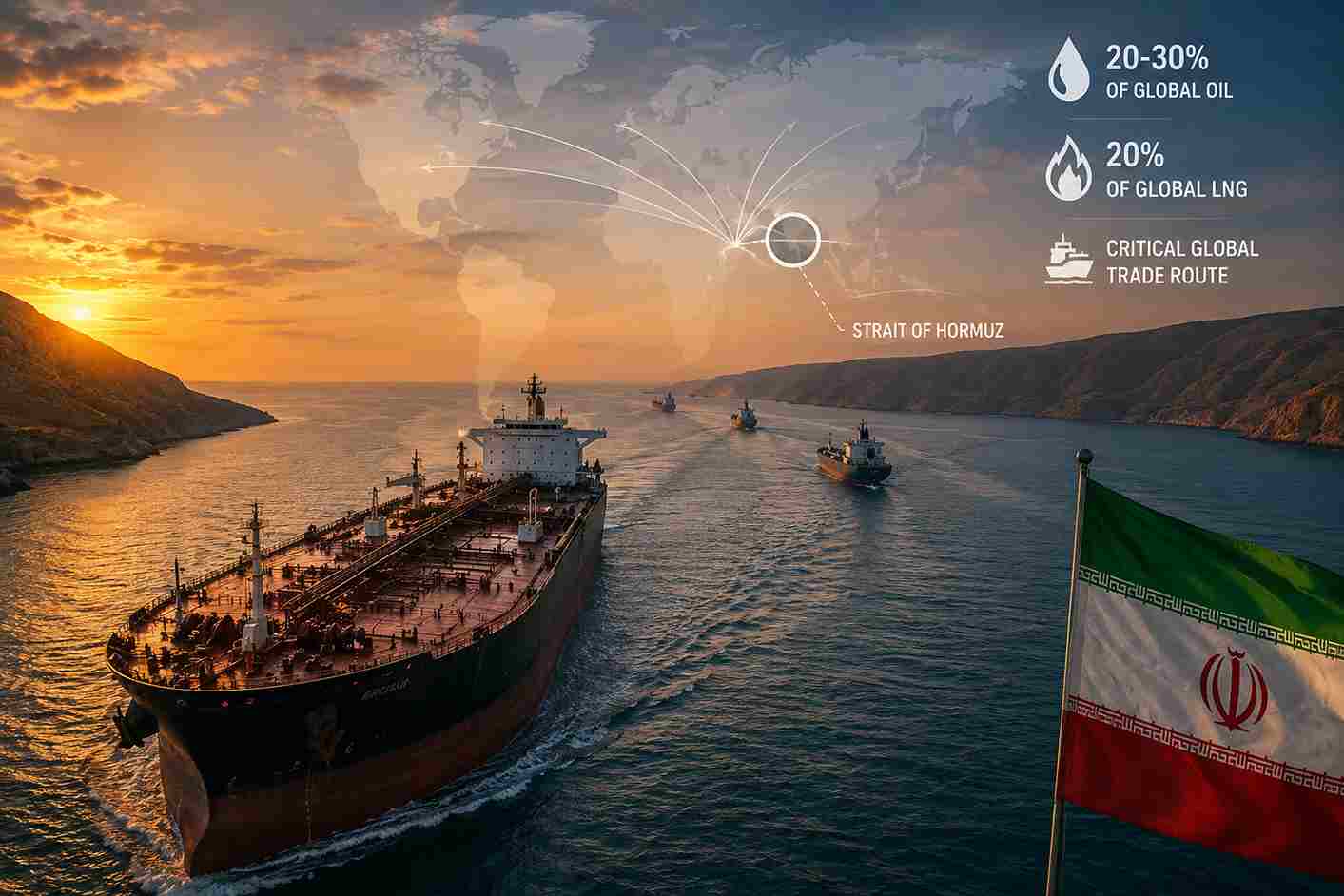
The primary driver behind the sudden stabilization in energy markets is the potential reopening of unrestricted shipping through the Strait of Hormuz. According to reports from major news syndicates, this strategic maritime corridor typically facilitates the transport of roughly 20 to 30 percent of global seaborne oil and liquefied natural gas (LNG). Any sustainable breakthrough in diplomatic talks directly reduces the likelihood of severe supply chokepoint disruptions.
Recent diplomatic commentary has been cautiously optimistic but measured. Treasury Secretary Scott Bessent noted that a comprehensive agreement was “within sight,” though awaiting final presidential authorization. Meanwhile, Vice President JD Vance told reporters the two sides were “very close” but “not there yet,” pointing out that significant sticking points remain regarding regional security frameworks and strict compliance oversight.
Price Action: Energy Markets Exhale
The alleviation of immediate supply shock fears has resulted in downward price adjustments across the global energy sector. According to market data cited by Reuters and Bloomberg during Friday trading sessions:
- Brent crude oil futures retreated by approximately 2 percent, sliding into the $91.80 to $93.36 per barrel range.
- West Texas Intermediate (WTI) crude also fell by over 2 percent, settling between $86.89 and $88.27 per barrel.
- Cumulatively, [INSERT_INTERNAL_LINK_HERE] Brent crude has declined nearly 18 percent through the end of May, positioning the benchmark for its most severe monthly loss since the onset of the 2020 economic disruptions.
Wall Street’s Reaction: A Tech-Driven Equity Rally
While energy markets contract, equities are absorbing the shifting capital flows. The prospect of lower energy input costs, combined with a robust corporate earnings season, has pushed U.S. indices upward. The technology sector, heavily driven by [INSERT_INTERNAL_LINK_HERE] commercialization and enterprise cloud adoption, remains a primary growth engine. Wealth management executives emphasize that robust technology earnings, rather than solely geopolitical headlines, have been the fundamental power behind the market’s upward trajectory.
The broader market performance reflects strong investor engagement:
- The Nasdaq Composite led the major averages with a roughly 8 percent climb in May, contributing to an astonishing 24 percent two-month percentage gain.
- The S&P 500 added nearly 5 percent for the month, while the Dow Jones Industrial Average secured a 2 percent advance.
- Currency desks executed relief trades, weakening the safe-haven demand for the U.S. dollar; the Intercontinental Exchange (ICE) Dollar Index hovered near 98.997, while the Euro rose to $1.1653 and the Yen strengthened to 159.27 per dollar.
Market Analysis: Geopolitical and Industrial Perspectives
Independent energy and shipping analysts suggest that while a ceasefire would normalize physical trade routes, structural changes in global supply chains will not dissolve overnight. Reductions in wartime insurance premiums could save maritime carriers millions per transit, which may eventually lower retail fuel surcharges and alleviate freight overhead for major distributors.
However, compliance remains a double-edged sword. Geopolitical analysts remain cautious, noting that historical frameworks have encountered swift reversals if localized proxy frictions reignite. This mixed sentiment is keeping a baseline level of caution alive in the options market, preventing crude from breaking below key multi-month support floors.
Navigating Market Shifts: Strategic Imperatives for B2B Leaders
The current macroeconomic environment presents both relief and risk for enterprise operations. To capitalize on stabilizing energy costs while protecting against the fragility of international diplomacy, organizations are increasingly updating their operational infrastructure. Relying on legacy manual records is no longer a viable method for managing global volatility.
1. Implement Advanced Treasury Management Systems
With currency markets reacting swiftly to diplomatic news, corporate treasurers face shifting foreign exchange (FX) exposures. Many enterprises are increasingly adopting treasury management platforms and automated software strategies to improve resilience against geopolitical volatility. These methods allow finance teams to manage FX hedging and achieve real-time visibility into global liquidity before sudden headlines trigger new volatility.
2. Optimize Procurement with AI-Driven Supply Chain Platforms
If the Strait of Hormuz experiences sustained de-escalation, freight rates and fuel surcharges will require immediate recalculation. Procurement leaders are leveraging AI-enabled procurement systems and predictive analytics to instantly evaluate logistics contracts based on falling Brent and WTI indices. Utilizing modernized risk management platforms is a proven strategy for identifying cost-saving opportunities in freight routing and raw material sourcing.
3. Upgrade Risk Monitoring Infrastructure
Because the U.S.-Iran ceasefire is described as a tentative framework that still faces political hurdles, organizations must maintain continuous situational awareness. Integrating automated risk intelligence feeds into enterprise resource planning (ERP) ecosystems ensures that supply chain managers receive immediate alerts if negotiations deteriorate, allowing for proactive, data-driven inventory adjustments.

The Path Forward: Monitoring the 60-Day Window
The proposed 60-day ceasefire framework offers a critical window for corporate planning. However, market participants should remain vigilant. The international energy community indicates that tightness in refined petroleum products, particularly jet fuel, will require time to ease even if maritime corridor conditions improve materially in the coming weeks.
For B2B enterprises and supply chain directors, the ultimate takeaway is preparedness. By adopting a modern, technology-enabled strategy, companies can insulate their profit margins against sudden geopolitical shocks while fully capitalizing on the current relief in global energy pricing.
Frequently Asked Questions (FAQ)
What is the Strait of Hormuz and why is it important?
The Strait of Hormuz is one of the world’s most critical maritime chokepoints, located between Oman and Iran. It connects the Persian Gulf with the Gulf of Oman and the Arabian Sea. The corridor typically carries roughly one-fifth of global oil and liquefied natural gas shipments, meaning any operational disruption immediately impacts energy prices worldwide.
Why are global oil prices falling?
Markets are pricing in a reduction of supply disruption risks in the Middle East following reports of a potential 60-day ceasefire framework between the U.S. and Iran. This prospect of de-escalation lowers the geopolitical risk premium that traders previously added to Brent and WTI crude contracts.
How does a ceasefire agreement affect the U.S. stock market?
A potential ceasefire reduces uncertainty, lowers expected energy input costs for corporations, and weakens the demand for safe-haven assets like the U.S. dollar. This environment frees up capital to rotate back into growth equities, contributing to rallies across major indices like the S&P 500 and the Nasdaq Composite.
What should businesses watch during the 60-day tentative deal period?
Organizations should monitor final political authorizations from both Washington and Tehran, official compliance statements from international nuclear watchdogs, and maritime freight volume changes through the Strait of Hormuz to evaluate if the energy price stabilization is permanent.
Sources: Reuters, Associated Press, Bloomberg Terminal Data, CME Group Market Reports, ICE Index Tracking, Axios, CBS News, and International Energy Agency Public Statements.
Author Bio: The Glovgo Editorial Team – Glovgo’s business desk covers global markets, energy economics, macroeconomic policy, enterprise technology, and geopolitical developments affecting U.S. businesses. Our dedicated researchers provide actionable intelligence for B2B leaders navigating complex supply chain and financial environments.
Editorial Note: Market prices and financial figures are subject to change and reflect available reporting at the time of publication.
About the Author