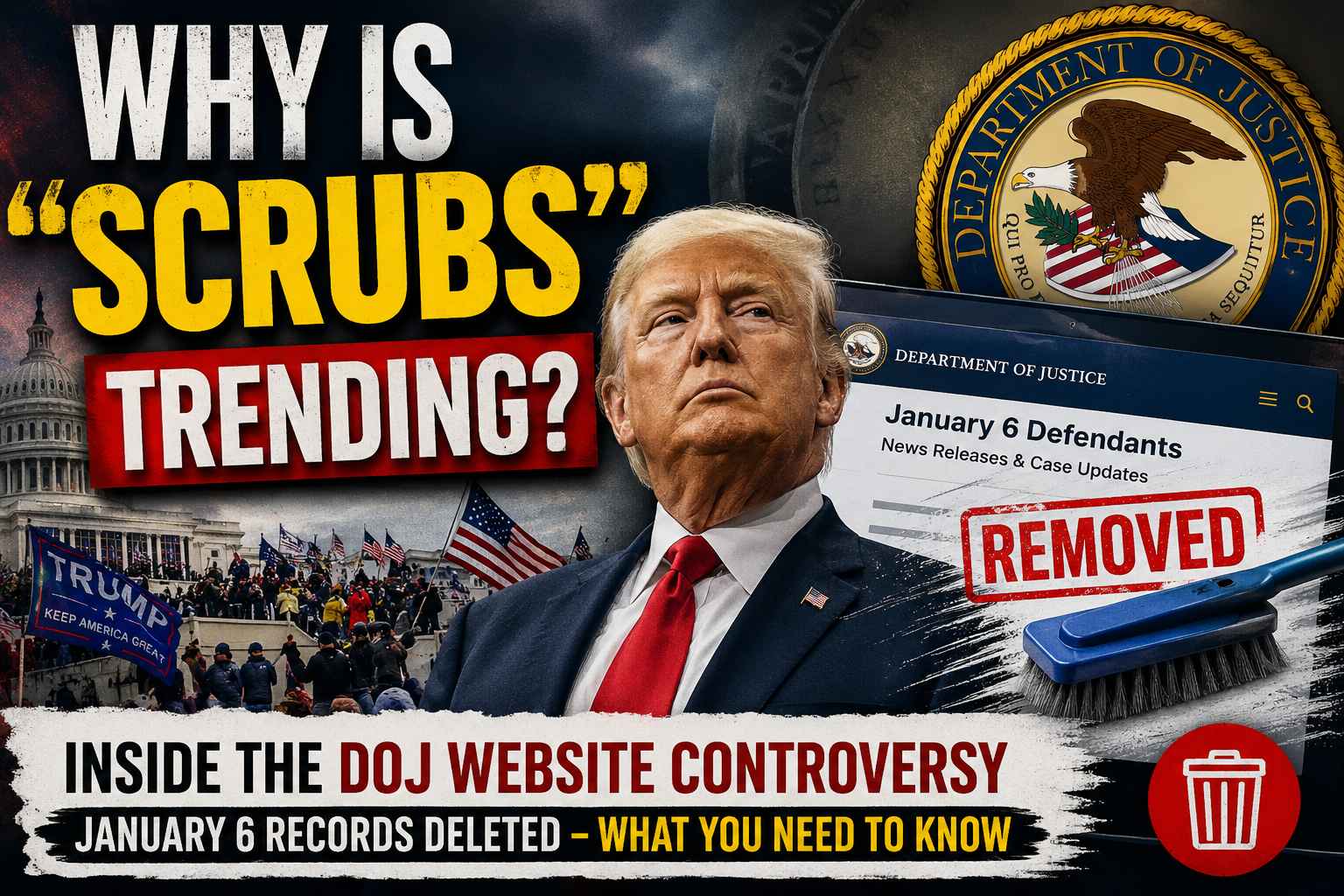
The keyword “Scrubs” surged on Google Trends after reports confirmed the DOJ removed multiple January 6-related webpages, sparking debate over transparency, public records, and political accountability.
Why Is “Scrubs” Trending on Google? Inside the DOJ Website Controversy
“Scrubs” is trending in U.S. politics after the Department of Justice removed multiple January 6-related webpages and prosecution press releases from its public website. The controversy sparked a nationwide debate about government transparency, historical records, and political accountability.
Internet users searching for information might initially suspect a debate over healthcare uniforms. However, the sudden spike in search volume relates to an ongoing political event involving the U.S. Department of Justice (DOJ), the current administration, and the public records of the January 6, 2021, Capitol attack.
Users are typing queries like “why is scrubs trending on Google” to understand recent reports that the Justice Department removed official news releases and prosecution updates related to January 6 defendants from its website. The DOJ acknowledged these removals, describing the previously published materials as partisan information. This action has shifted the narrative from a niche observation into a significant national topic.
As news organizations reported the story, the term quickly became the defining focus of the event. This article explains the political meaning of scrubs, the facts surrounding the DOJ website changes, the public reaction, and the broader debate over federal record-keeping.
Why Is “Scrubs” Trending Today?
Search trends often reflect immediate public interest in breaking news. The current breakout highlights the ongoing political debate regarding federal transparency. The trend began after reports surfaced on social media that the Justice Department was taking down press releases regarding the federal convictions and sentencings of January 6 defendants.
The DOJ’s public response confirmed the removal of the records. By openly acknowledging the deletion of the materials, the agency turned the event into a prominent news story, which contributed to the rapid rise of the topic in search trends. Citizens immediately turned to search engines to verify the facts, searching for updates on the January 6 DOJ controversy.
What Does “Scrub” Mean in Politics and Government?
To understand the political meaning of scrubs, it is necessary to look at how federal agencies manage digital information. In government terminology, to “scrub” a platform means to remove, delete, or alter digital records, public statements, or historical data from official domains.
When an administration transitions, federal agencies routinely archive the previous administration’s website. However, removing specific law enforcement press releases, conviction records, and criminal prosecution summaries from an active agency database often draws significant public and media attention.
In the context of the current DOJ removes Jan 6 records debate, the term carries varying significance depending on political perspectives. Some view the removal as a necessary administrative update to ensure neutrality, while others see it as a concerning alteration of the digital historical record.
What Happened on the DOJ Website?
The core of the DOJ website controversy involves the deletion of official press releases documenting the arrests, charges, trial outcomes, and federal sentencings of individuals involved in the January 6 Capitol attack. Previously, the DOJ maintained a searchable online record of these specific cases.
According to reports from major news organizations, the removed pages included cases involving members of groups such as the Proud Boys and the Oath Keepers. Other deleted releases detailed cases involving assault on federal officers and various trespassing charges.
In public statements, DOJ officials indicated that the removals were a deliberate policy decision aimed at removing what they characterized as partisan messaging from government servers, stating they were reversing policies from the previous administration.
How January 6 Records Became Part of the Debate
The January 6 Capitol attack remains a highly discussed topic in US political news. The previous administration framed the prosecution of these individuals as an essential function of the justice system, using press releases to communicate legal outcomes to the public.
The current administration has adopted a different perspective on these prosecutions. The administration has also supported legal and policy actions related to some January 6 defendants. Removing the press releases aligns the Justice Department’s digital presence with the current administration’s broader policy goals.
The debate extends beyond a single set of webpages. It raises broader questions about how federal agencies preserve public records, communicate legal actions, and balance transparency with changing administrative priorities.
Supporters’ View: Why Some Defend the Decision
Supporters of the DOJ’s decision argue that the original press releases were not objective legal summaries, but rather politically influenced documents. From their perspective, taxpayer-funded government websites should remain strictly neutral.
Advocates for the policy believe that scrubbing these specific records is a practical step toward restoring objectivity to the law enforcement agency. They also point out that the defendants’ official court dockets and trial transcripts remain fully accessible within the judicial branch’s independent records system.
Critics’ View: Concerns About Transparency and Historical Records
Critics view the removal of the records as a challenge to government transparency. Legal scholars and political opponents argue that the press releases served as factual public records documenting the outcomes of federal trials and jury convictions.
Critics argue the removals could affect public access to historical government records. They express concern that while underlying court documents may still exist in judicial databases, DOJ press releases are the most accessible way for the general public and journalists to track federal law enforcement activities.
Political Impact and Public Reaction
The political impact of the website changes has been substantial, leading to discussions on news networks and social media platforms. The event highlights differing views on how the federal government should manage its digital archives.
For supporters, the DOJ’s stance is seen as fulfilling commitments to adjust federal operations. For critics and some lawmakers, the digital deletions raise questions about federal record-keeping laws and the responsibilities of public agencies.
Timeline of Events
- Initial Reports: Journalists note the removal of public press releases regarding January 6 prosecutions from the DOJ website.
- Agency Confirmation: The DOJ’s official communications team confirms the intentional removal of the materials, labeling the past releases as partisan.
- Media Coverage: News outlets verify that pages involving specific convictions have been removed from the DOJ site.
- Search Surge: The term “scrubs” reaches breakout status on search engines as the public seeks the political meaning behind the trend.
- National Debate: The incident becomes a primary topic on political news programs, centering on government transparency and digital records management.
Verified Facts vs Political Claims
It is important to separate verified actions from political interpretations regarding the removal of these federal records.
Verified Facts:
- The U.S. Department of Justice removed multiple press releases regarding January 6 federal criminal cases from its public website.
- The DOJ publicly confirmed this action through its official channels.
- The underlying legal court documents and federal trial dockets for these cases remain in the independent judicial branch system.
- The search term “scrubs” trended in the United States Politics category as a direct result of these events.
Political Claims (Disputed):
- Claim: The removed press releases were strictly partisan messaging. (This is the stance of the current DOJ, disputed by legal critics).
- Claim: The DOJ is actively trying to cover up the factual reality of the January 6 Capitol attack. (This is a primary accusation from critics, which the administration denies).
- Claim: The act of removing these digital press releases violates federal transparency laws. (This remains a debated topic pending potential oversight or review).
Frequently Asked Questions (FAQ)
1. Why is scrubs trending today?
The keyword is trending because the U.S. Department of Justice removed official press releases related to the federal convictions of January 6 defendants from its website, prompting a surge in public interest and search queries.
2. What does scrubs mean in politics?
In government contexts, to “scrub” means to intentionally delete or alter digital records, public policies, or official public statements from an agency website or database.
3. Did the DOJ remove January 6 webpages?
Yes. The DOJ has confirmed that it removed digital news releases documenting criminal charges and legal sentencings related to the Capitol attack.
4. Why is the January 6 DOJ controversy important?
The issue involves criminal justice, recorded history, and political accountability. It raises ongoing questions about how federal agencies preserve history and manage public information.
5. What are critics saying about the removals?
Critics argue that deleting the records affects government transparency, limits public access to accurate historical data, and impacts the objective reporting of law enforcement activities.
6. What are supporters saying about the DOJ website changes?
Supporters defend the removals as a necessary measure to eliminate perceived partisan bias from taxpayer-funded government platforms and restore institutional neutrality.
7. Does scrubbing the website affect the actual criminal convictions?
No. Removing a press release does not legally overturn a criminal conviction. Official legal records and court transcripts remain intact within the judicial branch’s court systems.
8. Why does this impact government transparency?
Federal agency websites are primary sources of verified information. When an agency deletes historical public records, it sparks debates over public narrative control and the right to access factual government data.
9. Are the deleted DOJ records permanently unavailable?
Not necessarily. While certain DOJ webpages were removed from public view, court records and archived versions of some materials may still be accessible through judicial databases, archival services, or official government record systems.
The Broader Impact on Political News
The surge of “scrubs” in search trends reflects an ongoing national conversation regarding recorded history and political accountability. The Department of Justice’s decision to remove January 6 press releases from its official website illustrates the complexities of federal record-keeping during an administration transition. As the current administration adjusts its digital presence and critics advocate for the preservation of government transparency, the debate over these removed records continues to be a notable focus in current US political news.
Editorial Note:
This article is based on publicly available reporting and official government statements available at the time of publication. Political opinions, interpretations, and legal arguments referenced in this article belong to the individuals or organizations expressing them. Readers should consult official government records and independent judicial databases for the latest developments regarding federal cases.
About the Author