Key Takeaways
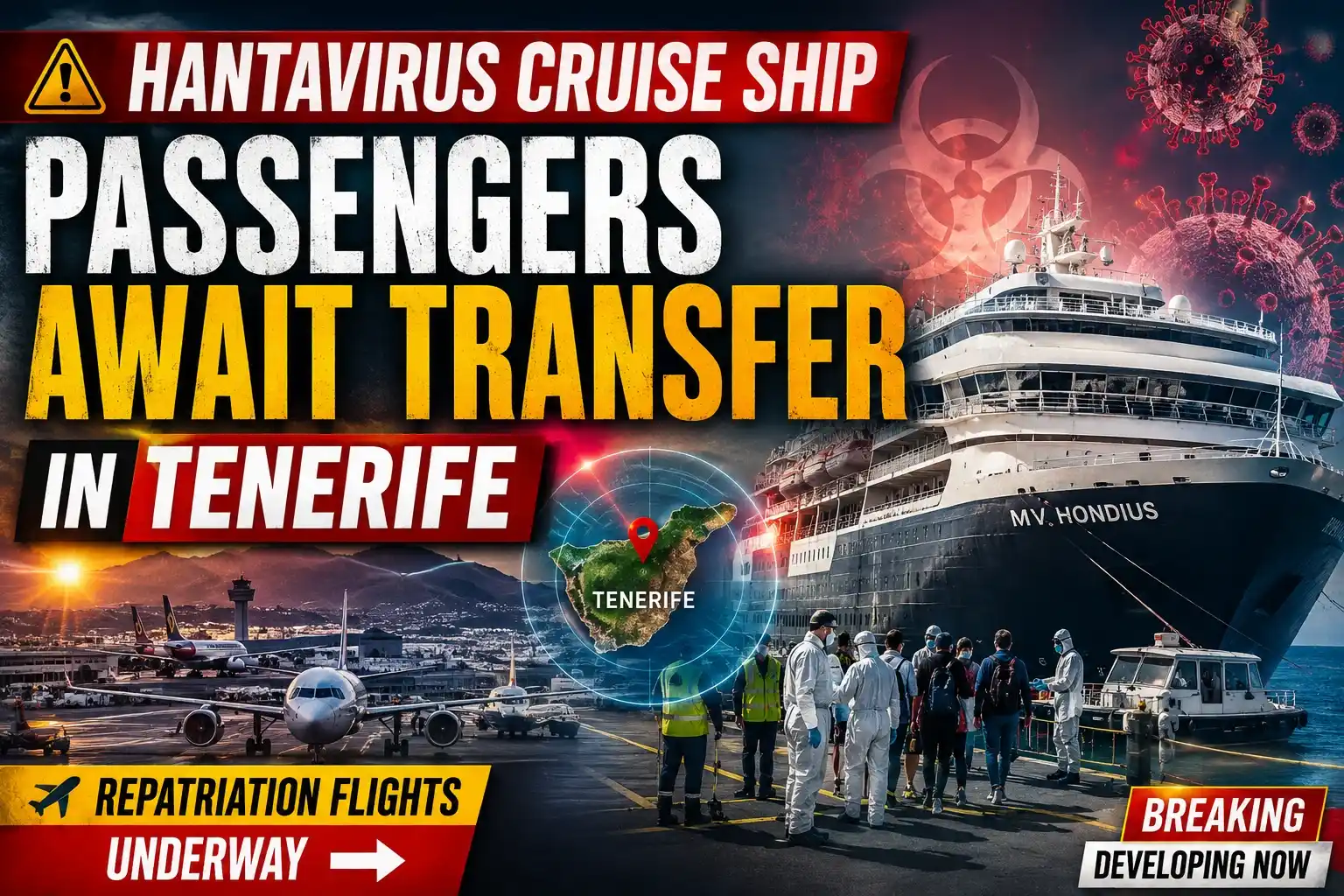
- A major disembarkation operation is currently underway off the Canary Islands.
- The MV Hondius anchored offshore near Tenerife to process travelers securely.
- Return flights are scheduled to immediately transport travelers to their home nations.
- The World Health Organization confirmed the broader public health risk remains low.
- Travel-related stocks are facing typical volatility as the situation develops.
What Happened?
A highly unusual public health event has triggered a coordinated international response off the coast of Spain. The New York Times reported on May 9, 2026, that Passengers on Hantavirus Cruise Ship will disembark in Tenerife before returning home.
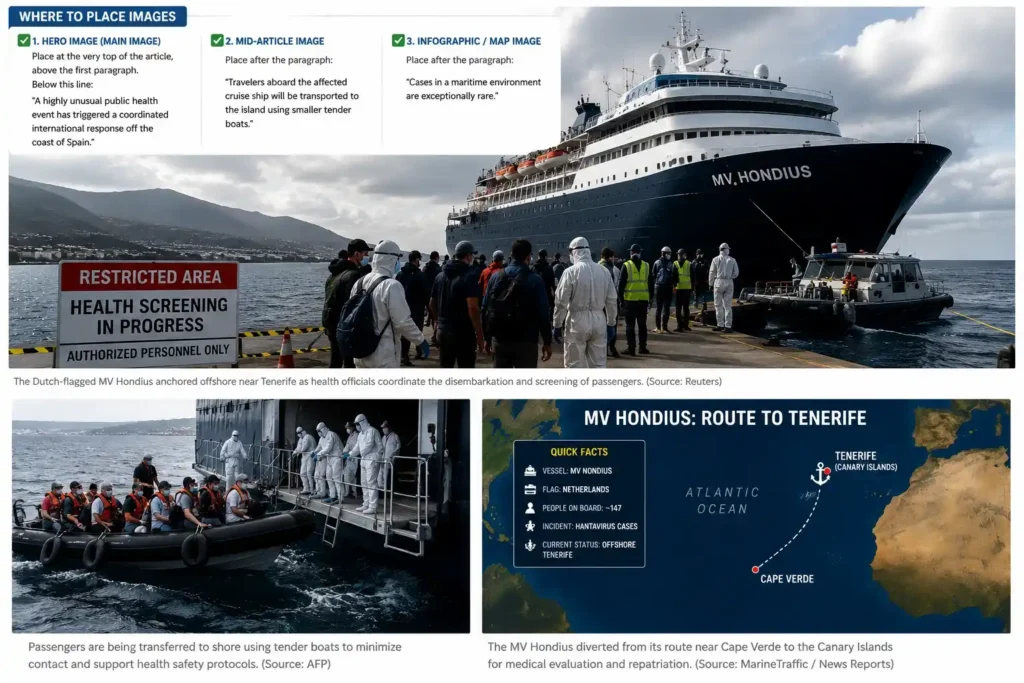
The vessel involved in the incident was identified as the Dutch-flagged MV Hondius. Officials said the ship was carrying roughly 147 individuals while traveling near Cape Verde.
Three fatalities have been connected to the incident, prompting the vessel to divert toward the Canary Islands. Health officials and maritime authorities carefully coordinated the arrival procedures to ensure orderly processing. The primary focus is securely moving travelers from the vessel directly to awaiting charter flights.
Authorities anchored the ship offshore near the port of Granadilla instead of docking at the main terminal. The operation requires coordinated aviation and ground transportation resources. Information remains tightly controlled as multiple national governments finalize immediate repatriation logistics.
Why Tenerife Matters
Tenerife serves as a vital maritime and aviation hub for the eastern Atlantic Ocean. However, local concerns prompted a shift in the standard docking protocol. Spanish authorities agreed to anchor the vessel offshore rather than bringing it directly into the busy port.
Travelers aboard the affected cruise ship will be transported to the island using smaller tender boats. Officials said the offshore transfer strategy was designed to reduce operational congestion and simplify health screening procedures. The island features two major international airports capable of supporting wide-body aircraft for rapid departures.
Spanish health authorities have extensive experience managing complex maritime incidents. The local emergency response network, working alongside global health agencies, established a secure perimeter. This setup allows medical teams to conduct health screenings before passengers board their flights.
Timeline of Operations
| Event | Status |
|---|---|
| Vessel diverted to Canary Islands | Confirmed |
| Ship anchors offshore near Granadilla | Confirmed |
| WHO officials arrive in Tenerife | Confirmed |
| Medical screening of travelers | Underway |
| Repatriation flights depart | Pending |
What Is Hantavirus?
Hantaviruses are a family of viruses spread primarily by rodents. Human infection generally occurs through contact with rodent urine, saliva, or droppings. The virus can become aerosolized, allowing individuals to breathe in the infectious particles in enclosed spaces.
Cases in a maritime environment are exceptionally rare. Officials have not publicly released complete medical details related to the specific strain involved in the incident. However, global health officials have stated unequivocally that the broader public health risk remains low.
Officials have not yet identified how the exposure may have occurred aboard the vessel. Health authorities have not yet confirmed additional public exposure risks connected to the incident.
Why Americans Are Watching This Story
The situation quickly captured the attention of US audiences due to the involvement of international travel and global health agencies. The Centers for Disease Control and Prevention closely monitors overseas outbreaks that could impact returning American citizens. Travel safety remains a top priority for families planning summer vacations abroad.
News of the Passengers on Hantavirus Cruise Ship also highlights the vulnerability of global transit networks. Americans are highly sensitive to disruptions involving passenger vessels and quarantine measures. The US government frequently coordinates with European allies to secure safe passage for its citizens during sudden health scares.
The incident provides a real-time look at how modern travel infrastructure handles unexpected emergencies. Viewers across the country are tracking the story to understand how quickly international flights can be mobilized. The rapid response in Spain sets a precedent for how similar events might be handled globally.
Travel Industry Impact
Public health headlines often rattle consumer confidence within the leisure travel sector. The cruise industry relies heavily on advance bookings and strong brand perception. An event of this nature can cause prospective travelers to hesitate when planning future vacations.
Several cruise operators are expected to review onboard health and sanitation procedures following the incident. The industry understands that high-profile events invite immediate regulatory scrutiny.
Port authorities around the world may temporarily tighten health screening requirements for incoming ships. Local municipalities sometimes react defensively to news of outbreaks on passenger vessels. Enhanced documentation and sanitation certifications could become temporary requirements for docking approvals.
Cruise Industry Fallout
The financial mechanics of the maritime travel sector leave operators vulnerable to sudden operational disruptions. Repatriation operations require immediate cash outlays for charter flights, tender boats, and passenger compensation. These unexpected expenses hit company balance sheets directly.
Travel-related shares sometimes experience volatility during major public health developments tied to international tourism. Investors usually monitor booking trends closely when outbreaks affect major cruise routes. The broader market sometimes penalizes the entire sector, regardless of which specific company owns the affected ship.
Public relations teams face the complex task of managing brand reputation during an active situation. The priority shifts from marketing new itineraries to demonstrating transparency and operational competence. Companies must show they are prioritizing human safety over revenue generation.
US Traveler Concerns
American citizens caught in international travel disruptions rely heavily on the State Department for logistical support. Consular officers coordinate with local governments to ensure travelers have proper documentation for sudden return flights. Health-related evacuations often require specialized clearance from federal health agencies.
Returning travelers frequently face health screening protocols upon arrival at US ports of entry. Customs and Border Protection officers work alongside public health personnel to monitor incoming flights from affected regions. Agencies have advised that passengers linked to the Hantavirus-related cruise incident will undergo standard evaluations.
Travel insurance policies will be tested heavily in the coming days. Standard policies vary widely in their coverage of virus-related trip interruptions. Many travelers will likely face out-of-pocket expenses until their claims are fully processed.
Airline and Tourism Implications
The sudden need to transport travelers requires immediate mobilization of commercial and charter aviation assets. Airlines occasionally reallocate aircraft from standard routes to fulfill emergency charter contracts. This sudden shift can cause minor scheduling adjustments across transatlantic routes.
Local transportation services and airport teams are coordinating the transfer process between the port and nearby airports. The movement of travelers from the tender boats to the tarmac requires secure ground transportation resources. Spanish officials have established a sterile corridor to safely manage the transit.
Aviation support services face pressure to process these flights rapidly. Ground handlers, fueling companies, and security services must operate efficiently under strict guidelines. The goal is to minimize the time travelers spend waiting before boarding their flights home.
Market and Investor Reactions
Financial analysts carefully track the economic ripple effects of maritime health events. The interconnected nature of global travel means multiple market sectors face immediate risk exposure.
The cost of operating for cruise companies is tied to their perceived operational risk. Industry borrowing costs can rise if lenders believe long-term bookings will suffer. Analysts look for immediate transparency regarding the direct financial cost of the interruption.
| Market Sector | Primary Risk Exposure | Standard Market Reaction |
|---|---|---|
| Major Cruise Lines | Brand reputation and operational costs | Intraday stock volatility and volume spikes |
| Airlines (Charter) | Resource allocation and scheduling | Short-term revenue shift from charter contracts |
| Travel Insurance | Surge in sudden trip interruption claims | Increased focus on policy language limits |
| Port Operators | Emergency staging and security expenses | Neutral, costs generally passed to operators |
What Happens Next?
The timeline for the Passengers on Hantavirus Cruise Ship will move rapidly once medical clearances are granted. Health personnel are expected to conduct final evaluations before travelers leave the vessel. Cleared individuals are then escorted directly to the waiting tender boats.
Security forces in Tenerife maintain a secure corridor from the Granadilla shoreline to the airport tarmac. This ensures the returning travelers do not mix with the general tourist population. Aircraft are pre-positioned and prepared for immediate departure once boarding is complete.
Global health agencies will continue a thorough investigation of the vessel once everyone has departed. Epidemiologists will seek to firmly establish the timeline of the initial infection to prevent future occurrences. The safe return of the travelers remains the central focus of the international community.
About the Author