Keel Infrastructure Stuns Investors with Aggressive AI Transformation
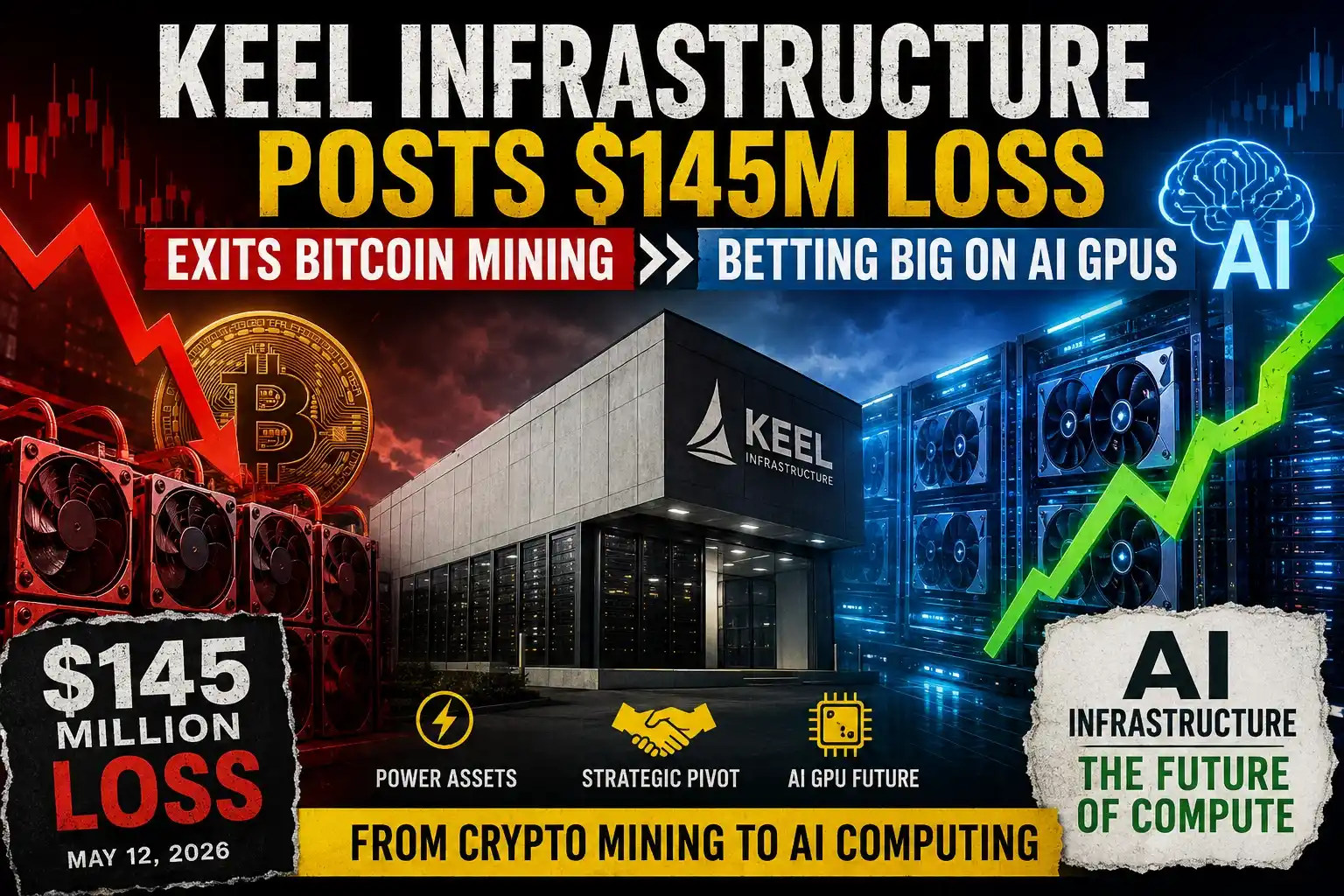
Keel Infrastructure stunned crypto and technology investors Tuesday after reporting a massive $145 million loss tied to its transition away from Bitcoin mining. This news represents one of the most significant strategic pivots in the digital infrastructure sector this year. Verified reporting from Crypto Briefing confirms that Keel Infrastructure posts 145M loss as it moves aggressively toward high-performance AI computing.
The announcement on May 12, 2026, marks a definitive end to the company’s era as a traditional cryptocurrency miner. This $145 million figure is not just a standard deficit; it represents a major impairment of legacy mining hardware. The market is witnessing a total re-alignment of physical power assets toward the booming artificial intelligence sector.
That shift is drawing attention because it highlights the massive capital barrier to entry for the AI space. Transitioning energy-dense data centers from ASIC miners to GPU clusters is a complex financial undertaking. Many industry observers see this as a necessary survival move in an era of thinning mining margins.
Why This Story Is Trending Across Wall Street
Investors who once chased Bitcoin mining growth are now reassessing where the next infrastructure profits may emerge. The AI boom is rapidly changing how Wall Street values power-heavy digital assets. As institutional capital rotates, companies with ready access to the electrical grid are becoming the new prize in the technology sector.
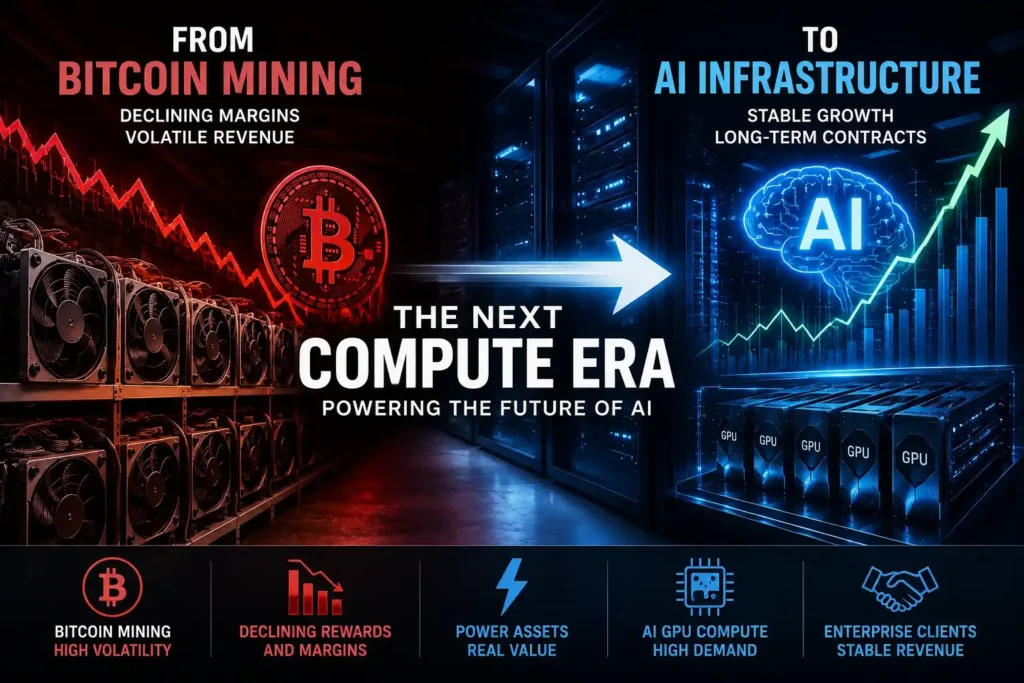
The market is shifting its focus from digital tokens to physical compute power. This transition is not just about technology; it is about the energy economics of the next decade. Analysts are watching closely as the physical pipes and power of the internet are repurposed for the generative AI era.
Key Takeaways for US Investors
- Net Loss: The firm officially reported a $145 million loss.
- Strategic Pivot: Core operations are transitioning from Bitcoin mining to AI infrastructure.
- Publication Date: The financial results were confirmed by Crypto Briefing on May 12, 2026
Why This Matters for US Investors
The AI race is no longer just about software developers; it is about who owns the power capacity. US investors are realizing that AI infrastructure is becoming the most sought-after asset class in tech. When Keel Infrastructure posts 145M loss, it signals a massive reallocation of resources toward the infrastructure needed for large language models.
Here’s why investors care: Bitcoin mining revenue is notoriously volatile, fluctuating with token prices and network difficulty. AI infrastructure, by contrast, often relies on multi-year lease agreements with enterprise technology firms. This structural shift could lead to more predictable cash flows over time, even if the initial transition cost is incredibly steep.
Beyond the Q8: How the 2027 Audi Q9 Redefines Luxury SUV Technology
Wall Street is closely watching the capital expenditure required for this pivot. High-end GPUs cost significantly more than traditional crypto ASIC miners. Investors must determine if the long-term enterprise value of an AI data center justifies the massive write-down reported today.
The market reaction matters because it shows how quickly legacy crypto firms are being forced to adapt. The company is now betting its future on one of the hottest sectors in tech. The bigger issue may be how many other mining firms are currently hiding similar impairment risks.
By the Numbers: The Financial Breakdown
- $145 Million: The total impairment and operational loss reported for the period.
- May 12, 2026: The date Keel Infrastructure officially confirmed its shift from Bitcoin to AI.
- 100 Percent: The operational focus shifting away from digital asset mining toward high-performance computing.
Comparative Economics: Mining vs. AI Data Centers
| Feature | Bitcoin Mining Framework | AI Infrastructure Framework |
|---|---|---|
| Revenue Stability | High Volatility (Token Based) | High Stability (Contract Based) |
| Hardware Deployment | Application-Specific Integrated Circuits | Graphics Processing Units (GPUs) |
| Power Density Needs | Moderate (Standard Air Cooled) | Extreme (Advanced Liquid Cooled) |
| Customer Base | Decentralized Network | Enterprise Clients |
Wall Street Analyst View: Repositioning for the GPU Era
Market participants could interpret the reported loss as a strategic cleaning of the balance sheet. Analysts may see this as a bold move to write off underperforming mining rigs before they reach zero inherent value. Investors are watching to see if this impairment is a precursor to a new round of institutional debt or equity funding.
Analysts suggest that the sheer scale of the write-off illustrates the cost of speed in the AI world. Retrofitting a traditional data center for AI requires high-speed fiber, advanced cooling mechanisms, and sophisticated power management systems. Market participants could interpret the loss as the necessary entry fee for the next generation of computing.
There is a growing sentiment that power capacity is becoming more valuable than the hardware inside the building. Keel Infrastructure holds significant power assets that are difficult to obtain in the current regulatory environment. Investors are watching to see if the company can rapidly monetize these power assets through AI leases.
Market Sentiment: How Wall Street May React
The news that Keel Infrastructure posts 145M loss comes at a time of significant institutional capital rotation. Many funds are actively moving away from pure-play crypto exposure toward AI hardware and cloud service providers. This earnings report could accelerate that trend among mid-cap infrastructure investors.
Institutional capital rotation often favors companies that demonstrate a clear path to enterprise revenue. While a $145 million loss is substantial, the market may reward the firm if it can secure future AI infrastructure operations. Investors are realizing the AI race is becoming purely infrastructure-driven, and power-ready sites are a primary bottleneck.
However, investor patience is not infinite. The impairment will likely put pressure on management to deliver signed enterprise contracts within the next two quarters. Analysts may see any delay in revenue generation as a sign that the retrofitting process is more difficult than management anticipated.
Operational Timeline: The Keel Strategy Shift
| Date | Strategic Action Reported | Market Outcome |
|---|---|---|
| May 12, 2026 | Reporting of 145M deficit. | Financial Impairment |
| May 12, 2026 | Official pivot to AI infrastructure. | Business Transformation |
| May 12, 2026 | Exit from Bitcoin mining confirmed. | Sector Exit |
The High Stakes of High-Performance Computing
The move to artificial intelligence is far more than a simple hardware swap on a server rack. Bitcoin mining machines are designed to solve one specific cryptographic problem, whereas AI GPUs are multipurpose and require a much more robust networking environment. This massive technical gap is a major reason why Keel Infrastructure posts 145M loss during the hardware write-down phase.
Energy access remains the defining factor in this transition. Industry analysts expect AI power demand to rise sharply over the next five years. Keel’s decision to exit mining suggests management believes their power capacity is vastly better utilized for AI training and inference models. That shift is drawing attention because it signals a potential exodus of miners toward the AI sector.
The bigger issue may be the energy grid itself. AI facilities require high reliability and redundancy that legacy Bitcoin mining sites often lack. Upgrading these industrial sites to enterprise standards is an expensive endeavor, contributing significantly to the financial results reported today.
Energy Capacity: The Value Potential in the Reported Loss
Despite the negative headline, Keel Infrastructure possesses a potential economic moat in the form of grid connectivity. Obtaining new industrial-scale power capacity in the US can take several years of permitting and construction. This makes the company’s existing sites potentially valuable to AI firms that need to deploy compute clusters quickly.
Investors should look beyond the hardware write-down and focus on the value potential of these power-ready sites. If a site is fully AI-ready, its potential value can be significantly higher than its previous use as a crypto-mining site. This underlying asset value could eventually offset the impairment if the execution is flawless.
Market participants could interpret the loss as a necessary sacrifice to pivot toward a higher-margin business model. The company is now betting its financial future on the scarcity of power and the abundance of AI computing demand. That shift is drawing attention from private equity firms looking for energy-dense infrastructure plays.
What Happens Next: Investors Should Watch These Signals
In the coming weeks, market participants should look for anchor tenant announcements. A signed deal with a major cloud provider or AI startup would validate the strategic pivot as a sound operational move. Without signed enterprise customers, the transition remains a high-risk operational gamble.
Second, Wall Street will closely monitor the company’s cash position. A $145 million loss often necessitates a fresh capital raise to fund future operations. Investors should watch for signs of equity dilution or new debt offerings, as the terms of this new financing will indicate exactly how much confidence institutional lenders have in the AI roadmap.
Third, keep an eye on competitive efficiency metrics for their newly retrofitted sites. Power usage effectiveness is the key to profit in AI hosting. If Keel can achieve industry-leading power efficiency, they will be highly competitive in the enterprise AI market. The bigger issue may be navigating the global supply chain for advanced cooling components.
FAQ: Analyzing the Keel Infrastructure Deficit
Why did Keel Infrastructure report a $145 million loss?
The loss is largely due to financial write-downs on legacy Bitcoin mining equipment as the firm officially exits that sector to focus entirely on AI infrastructure.
Is Keel Infrastructure still mining Bitcoin?
No, according to verified reporting, the company has officially confirmed its pivot away from mining and toward high-performance AI computing.
When did this news become official?
The financial results and strategic shift were reported by Crypto Briefing on May 12, 2026.
Why is AI infrastructure considered a potential growth sector?
AI hosting typically offers more stable, long-term contracts with enterprise clients compared to the highly volatile block rewards of cryptocurrency mining.
Could AI infrastructure eventually replace Bitcoin mining for many firms?
Analysts believe that companies with large-scale power access are increasingly tempted by the stable, contract-based economics of AI versus the inherent volatility of digital asset mining.
Investor Conclusion: A High-Stakes Transformation
The news that Keel Infrastructure posts 145M loss is a stark reminder that the crypto-mining sector is under extreme financial pressure to evolve. By taking a massive impairment now, Keel is attempting to position itself at the forefront of the artificial intelligence infrastructure boom. For US investors, this is a prime case study in industrial-scale capital rotation.
Investors should focus heavily on the speed at which the firm can convert its existing power capacity into verified AI revenue. The $145 million loss may ultimately be remembered as either a costly misstep or the brilliant starting point of Keel Infrastructure’s transformation into an AI-era power player. Wall Street now wants proof that the strategy can generate real revenue before investor patience runs out.
The company is now operating in an entirely different league, competing directly with established data center giants. Success will depend entirely on operational excellence, capital management, and supply chain execution. The Keel Infrastructure 145M loss is a remarkably high entry price, but in the world of artificial intelligence, the rewards for the few who own the compute infrastructure could be significant.
This article is for informational purposes only and does not constitute investment advice.
About the Author