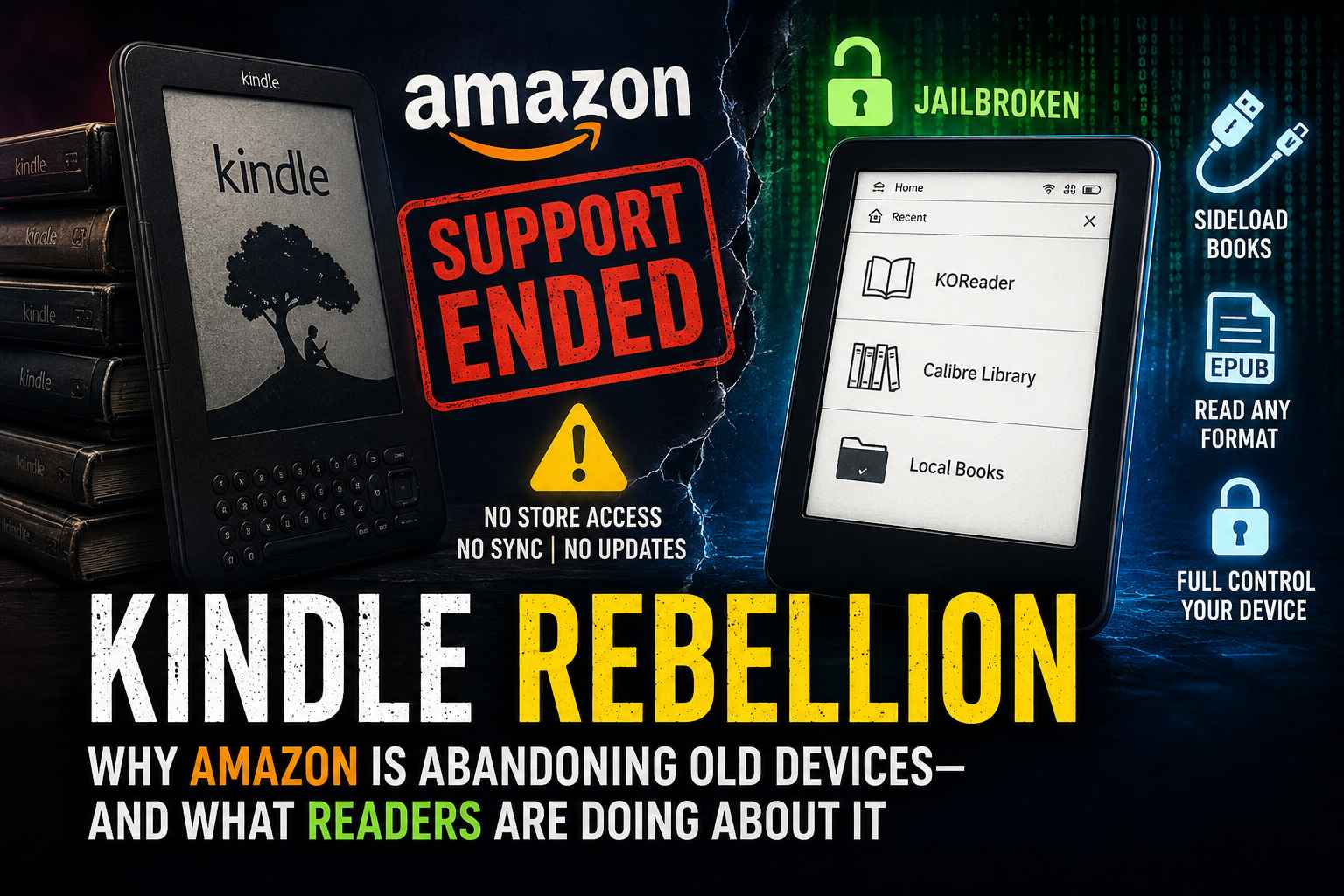
Users are modifying older Kindle e-readers after Amazon phases out support for legacy devices, raising questions about digital ownership and planned obsolescence.
Why Amazon is Abandoning Older Kindles—And What Readers Are Doing About It
In my analysis of consumer electronics, a recurring conflict consistently emerges between corporate profitability and consumer control. A clear example of this tension surfaced recently out of Seattle.
According to a May 16, 2026 report from TechCrunch, Amazon has officially begun phasing out support for older generations of its Kindle e-readers. For millions of users, this creates an immediate problem.
Devices that still hold a solid charge and display text flawlessly are being systematically cut off from the primary digital storefront. The internet connectivity features that made these readers appealing in the first place are going dark.
The mechanical reality of the modern tech industry is that a product’s lifespan is rarely determined by physical degradation. It is governed almost entirely by software roadmaps. Faced with the prospect of abandoning perfectly functional E-ink machines, a growing segment of users is refusing the forced upgrade cycle.
They are turning to a more direct strategy: modifying their devices’ core operating systems.
This is not just a story about a few internet forums trading software patches. It represents a measurable shift in consumer psychology. It is a direct challenge to the planned obsolescence models built by Silicon Valley.
The Economics Behind the Shutdown
To understand the consumer backlash, we must first look at the corporate rationale. Amazon is not terminating support arbitrarily. Keeping ancient servers running for a shrinking user base simply does not make financial sense.
Older Kindles run on outdated security protocols. As the web evolves, maintaining secure connections—specifically the cryptographic standards required to process credit card transactions and sync cloud libraries—becomes increasingly difficult on processors designed a decade ago. Amazon faces a distinct choice. They can either allocate expensive engineering resources to patch outdated firmware, or they can sunset the devices entirely.
By cutting off access to the Kindle Store and disabling wireless syncing features on these older models, Amazon turns a connected library into a closed, isolated screen.
For a company that generates its primary revenue from the continuous sale of digital goods, an e-reader that can no longer purchase books holds zero financial value.
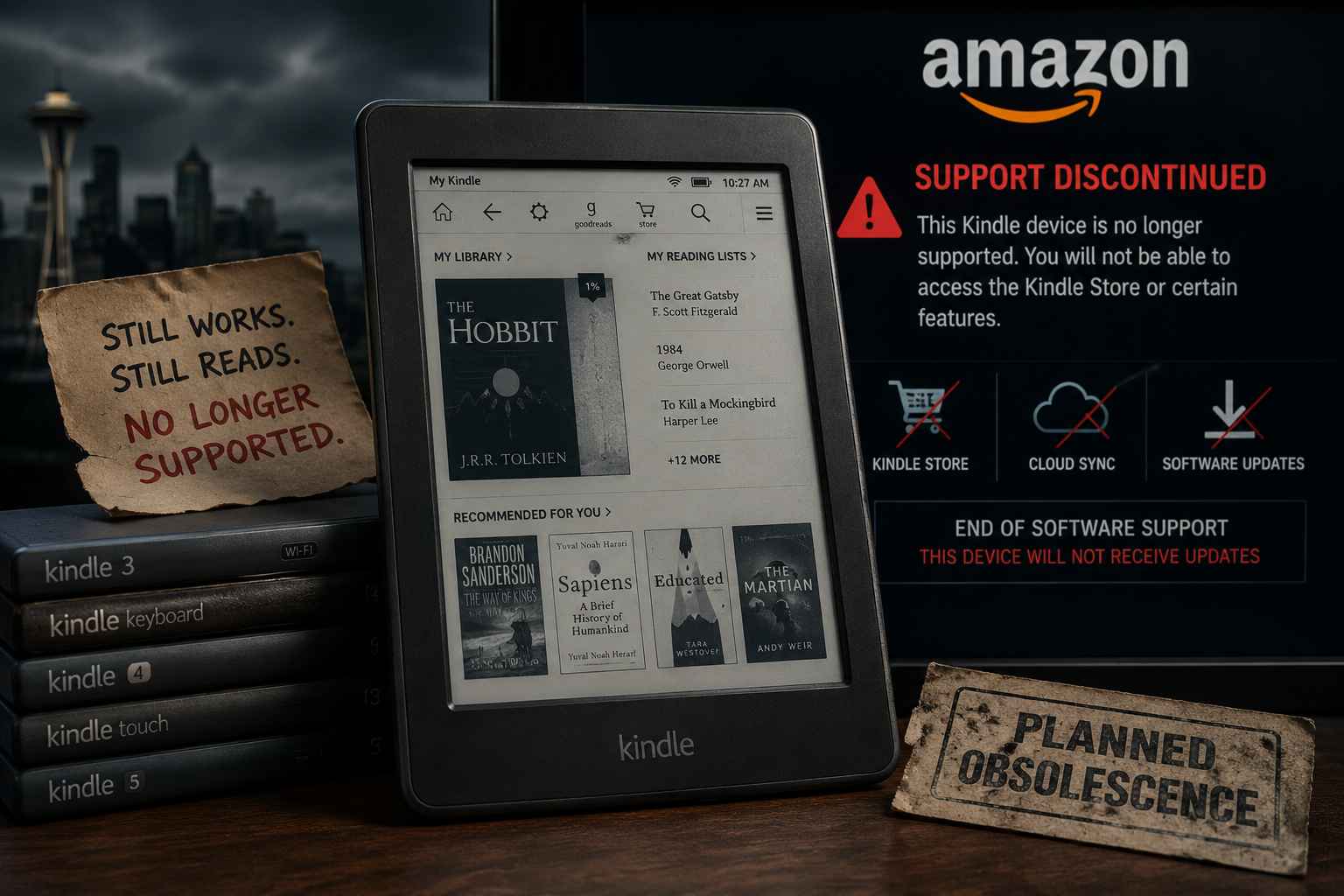
“The mechanical reality of the modern tech industry is that a product’s lifespan is rarely determined by physical degradation. It is governed almost entirely by software roadmaps.”
The Consumer Response: Bypassing the Digital Walls
Consumers, however, are pushing back.
Rather than tossing their legacy screens into the e-waste bin, they are utilizing software modifications to strip away Amazon’s restrictive operating system layer. This process, commonly known as jailbreaking, grants the user administrative access to the device.
Once this barrier is bypassed, users are no longer tethered to the proprietary storefront. They can install alternative reading applications, custom interfaces, and new screensavers. More importantly, they can natively read file formats that Amazon historically restricted, such as standard EPUB files, without needing to route them through cloud conversion servers.
Developers within the open-source community actively analyze older firmware versions to find software vulnerabilities. Once identified, they create a deployment package that average users can sideload via a standard USB cable.
Once executed, the device regains its utility entirely offline.
Sideloading and the Push for Independence
The immediate benefit of modifying an older Kindle is the ability to sideload content. Software programs like Calibre have become the backbone of this user movement.
Calibre acts as a personal digital librarian. It allows users to manage their ebook collections on their personal computers and transfer them directly to their modified readers.
This bypasses the need for Wi-Fi or an active Amazon account. By utilizing third-party reading software like KOReader, users gain access to advanced typography settings, better PDF reflowing, and deep customization options that were never provided on the base models.
This aligns with a broader trend across the industry: the desire to de-platform our daily tech. Just as mobile users install custom operating systems to remove tracking software from their smartphones, readers are modifying their Kindles to remove storefront telemetry.
It is a calculated move toward technological independence.
The Unique Problem with E-Ink Displays
To view this from a Wall Street perspective, we must examine Amazon’s traditional strategy. Amazon has historically sold the entry-level Kindle at or near cost. The physical unit is treated as a loss-leader—a portal designed to funnel users into a highly profitable digital environment.
When a consumer buys an entry-level e-reader, Amazon expects to make their margin over the next few years through individual ebook sales, Audible subscriptions, and Kindle Unlimited memberships.
However, E-ink technology presents a unique challenge to this model.
Unlike smartphones, which suffer from rapid battery degradation and sluggish processors as apps become more demanding, a basic E-ink screen designed in 2014 reads text just as well in 2026.
The core function of the device does not age.
This breaks the traditional tech upgrade cycle. If the physical product remains perfectly viable for over a decade, the manufacturer eventually has to pull the software plug to generate new sales.

Amazon’s Platform Revenue Model
| Revenue Stream | Profit Margin Profile | Platform Dependency |
|---|---|---|
| Kindle Device Sales | Low (Often Loss Leader) | Low |
| Direct Ebook Purchases | High (Estimated 30% cut) | Requires Active Store Access |
| Kindle Unlimited | Very High (Recurring) | Requires Continuous Cloud Sync |
E-Waste and the Environmental Reality
One of the most prominent arguments driving this user response is environmental impact. The tech industry has a massive, widely documented e-waste problem.
Discarding a perfectly functional lithium-ion battery, plastic chassis, and specialized display simply because a corporate server will no longer issue a security handshake is difficult to justify environmentally.
The modification community argues that bypassing software restrictions is a form of conservation. By extending the life of a Kindle by several years, users prevent toxic materials from entering landfills. As global supply chains face increasing scrutiny over rare-earth mineral mining, the practice of retiring functional machines via software updates is drawing the attention of environmental regulators.
The Right to Repair Horizon
The tension between Amazon and its legacy users mirrors the broader “Right to Repair” movement.
For years, major manufacturers argued that users do not actually own the software on their devices; they merely license it. Therefore, the manufacturer retains the right to alter or terminate that software at will. Consumer patience with this model is visibly thinning.
Legislatures across the United States and the European Union are actively evaluating Right to Repair laws. While these laws initially focused on the availability of physical replacement parts, the next frontier of this legal battle is software longevity.
Advocates are demanding that when a manufacturer officially abandons a piece of technology, they must provide a method for users to unlock the bootloader and install alternative software. Until those regulations become federal law, consumers will likely continue taking matters into their own hands.
The Practical Risks of Modifying
As a professional analyst, it is necessary to present the practical risks associated with this landscape. Modifying a device’s core operating system is not a manufacturer-sanctioned process, and it carries specific liabilities.
- The Risk of Bricking: If a software package is installed incorrectly, or if the device loses power during a system overwrite, the Kindle can become completely unresponsive.
- Loss of Support: Modifying the firmware immediately voids any remaining manufacturer support agreements.
- System Isolation: Heavily modified devices generally lose access to proprietary features like Amazon’s Whispersync, X-Ray, and direct Goodreads integration.
- Security Flaws: Running community-developed software can occasionally expose the device to vulnerabilities that the manufacturer would otherwise patch.
For users executing these modifications on ten-year-old devices that have already lost official support, these risks are generally viewed as acceptable.
Financial Implications for Amazon (AMZN)
From an institutional investment perspective, does this user movement actually threaten Amazon’s bottom line? The analytical answer is no.
The demographic of users willing to spend an afternoon navigating internet forums to download custom firmware via USB is statistically negligible compared to Amazon’s mainstream audience. The vast majority of consumers who receive an “end of support” notice will simply purchase a new model.
However, while it will not impact the quarterly earnings report, it serves as a sentiment indicator.
Consumer trust in digital ownership is shifting. When users realize that the digital library they spent years building can be cut off from their physical device at the discretion of a product manager, they begin to explore alternatives. We are seeing a slow but measurable movement toward DRM-free ebook stores and open-source e-reader hardware brands.
Amazon’s dominance in the publishing space remains highly secure, but they are losing goodwill among the most dedicated subset of heavy readers.

Frequently Asked Questions
Is it legal to modify the software on my older Kindle?
In the United States, modifying the software on a device you legally own for the purpose of interoperability—such as reading legally acquired alternative file formats—is generally protected under exemptions to the Digital Millennium Copyright Act (DMCA). Using a modified device to pirate copyrighted material, however, remains illegal.
Will modifying my Kindle delete my currently purchased books?
If executed correctly, modifying the operating system does not necessarily wipe your existing local files. Standard procedure recommends backing up all device content to a local computer via USB before attempting any system modifications.
Why doesn’t Amazon just leave the old store connections active?
Maintaining legacy Application Programming Interfaces (APIs) requires dedicated server space and constant security auditing. Older devices often lack the processing capability to support modern, secure encryption protocols required for safe financial transactions. Leaving them connected to modern payment gateways creates a systemic security risk.
Can I still use Wi-Fi on a modified e-reader?
Yes, though the functionality changes. The hardware antenna still works, but connecting to Wi-Fi on a modified Kindle is typically used to wirelessly transfer files via local network servers or access alternative open-source book catalogs, rather than syncing with Amazon’s servers.
Strategic Takeaway
The trend highlighted by TechCrunch is a clear symptom of a market struggling with the transition from physical products to digital licensing. When Amazon ends support for older Kindles, they are executing a standard corporate hardware cycle. When users respond by modifying that hardware to keep it functional offline, they are asserting rights over their physical property.
For the average consumer, this serves as a practical reminder: you do not own the platform, you merely rent access to it. If you wish to protect your digital library from planned software obsolescence, adopting a strategy of local backups and hardware independence is becoming a standard consumer practice.
Stay connected for more deep-dive analysis on consumer technology, digital ownership rights, and the future of platform ecosystems by subscribing to our editorial insights feed.
Professional Disclaimer
The information provided in this article is for educational and informational purposes only. Modifying the firmware or operating system of a consumer electronics device carries inherent risks, including the potential to render the device permanently inoperable (“bricking”) and the voiding of manufacturer warranties. Readers assume all responsibility for any modifications applied to their personal property. Additionally, any financial commentary regarding Amazon (AMZN) or market dynamics does not constitute investment or trading advice. Always conduct independent due diligence before making financial decisions or modifying consumer hardware.
About the Author