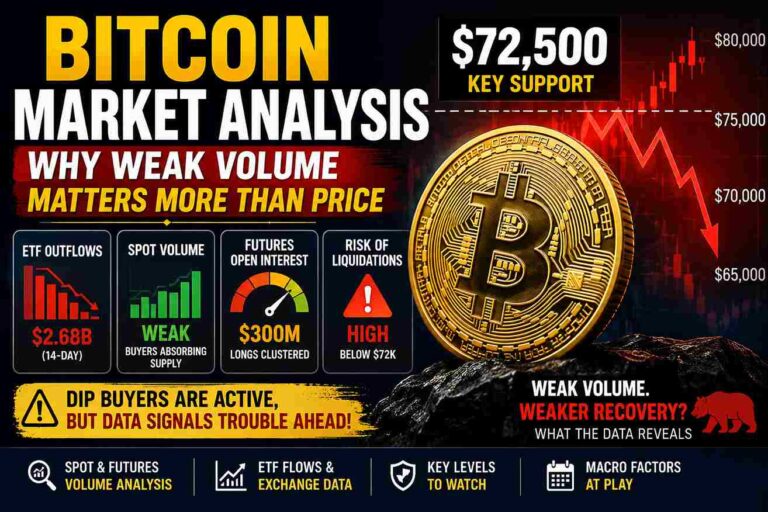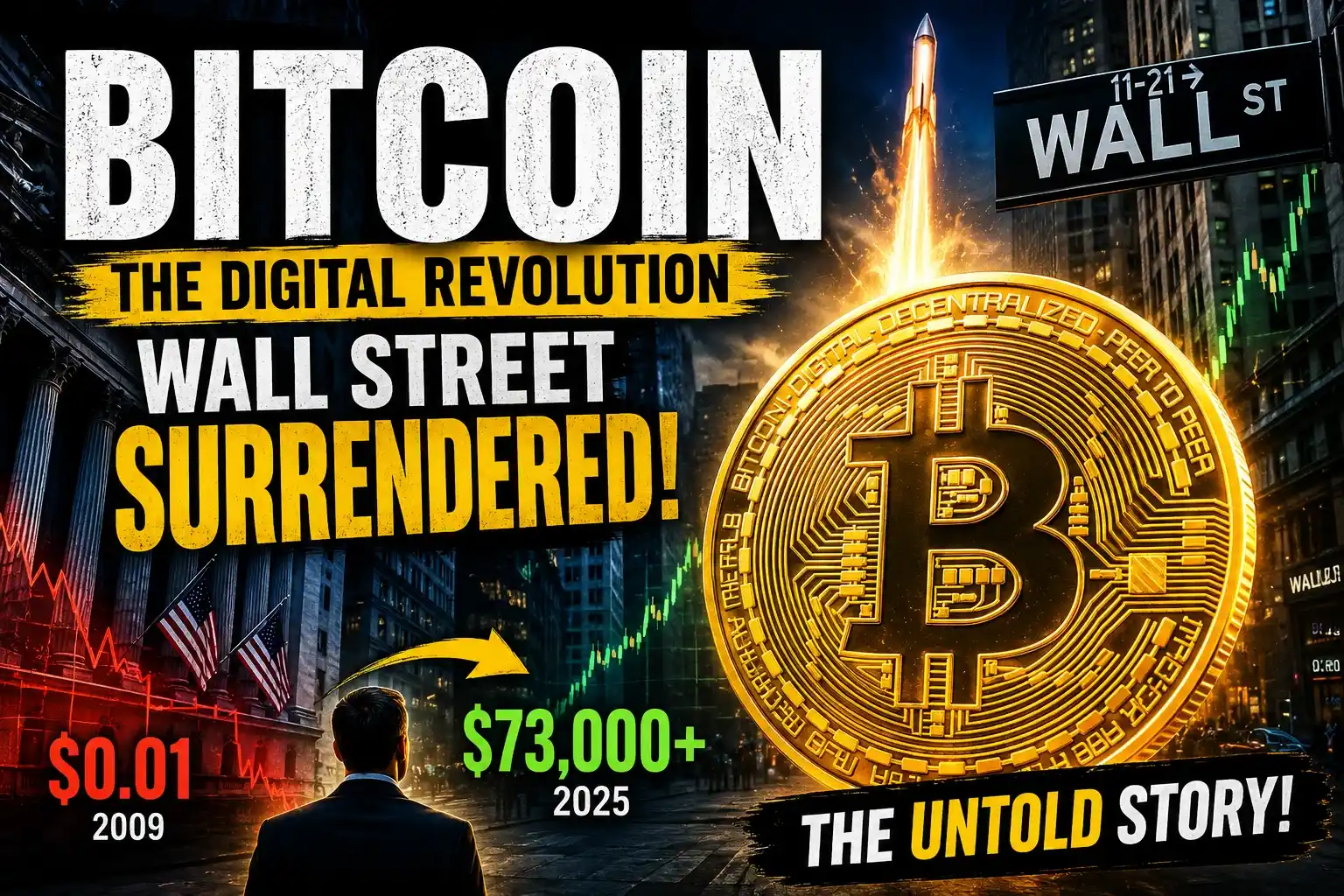
Bitcoin evolved from an obscure internet experiment into a trillion-dollar financial asset that forced Wall Street and institutional investors to rethink the future of global money.
The Ultimate Bitcoin Masterclass: How a Digital Experiment Forced Wall Street to Surrender
Last Updated: May 15, 2026
I have spent over two decades on trading floors, watching empires rise and fall. When Bitcoin first crossed our radar, the reaction among veteran macro strategists was universal amusement. We viewed it as digital monopoly money.
The smartest minds in traditional finance dismissed it entirely. Yet, what began as an internet experiment, priced in mere pennies, eventually forced the entire financial establishment to pay attention. Today, Bitcoin has periodically crossed the trillion-dollar market capitalization threshold during major bull cycles, earning a permanent place on modern corporate balance sheets.
This is not a story about digital magic. It is a story about monetary evolution, market psychology, and the relentless pursuit of financial sovereignty. Let us examine exactly how Bitcoin evolved from a misunderstood cryptographic project into a cornerstone of modern institutional portfolios.
The Genesis: Born in the Ashes of the Financial Crisis
To understand Bitcoin, you must understand the environment that created it. In the fall of 2008, the global banking system was on the verge of total collapse. Major financial institutions failed, and central banks responded by printing unprecedented amounts of fiat currency to bail them out.
Public trust in the traditional banking infrastructure was shattered. Right in the middle of this historic panic, an anonymous programmer—or group of programmers—using the pseudonym Satoshi Nakamoto published a nine-page document.
This document, known as the Bitcoin whitepaper, proposed a radical concept. It outlined a peer-to-peer electronic cash system that required no banks, no clearinghouses, and no government oversight. In January 2009, the Bitcoin network officially went live.
Nakamoto embedded a hidden message in the very first block of data: “The Times 03/Jan/2009 Chancellor on brink of second bailout for banks.” This was a clear signal. Bitcoin was designed as a direct countermeasure to central bank monetary policy.
From Pennies to Pizza: The Early Days of Price Discovery
In its infancy, Bitcoin had no established market value. It was traded purely among cryptography enthusiasts on obscure internet forums. For the first year, it was essentially worthless in dollar terms.
The defining moment of price discovery occurred in May 2010. A programmer named Laszlo Hanyecz famously paid 10,000 Bitcoin for two Papa John’s pizzas. At the time, those coins were worth about $41.
That single transaction proved that digital scarcity could translate into real-world purchasing power. Soon after, the first specialized digital asset exchanges opened. A new, highly volatile market was born.
Early mining required only a standard laptop computer. The barrier to entry was incredibly low, but the technological learning curve was steep. Those who understood the underlying math realized they were witnessing the birth of digital property.
The Cycles of Euphoria and Panic
Bitcoin does not move in a straight line. Its history is defined by massive, multi-year market cycles driven by a combination of retail euphoria, macroeconomic shifts, and algorithmic supply shocks.
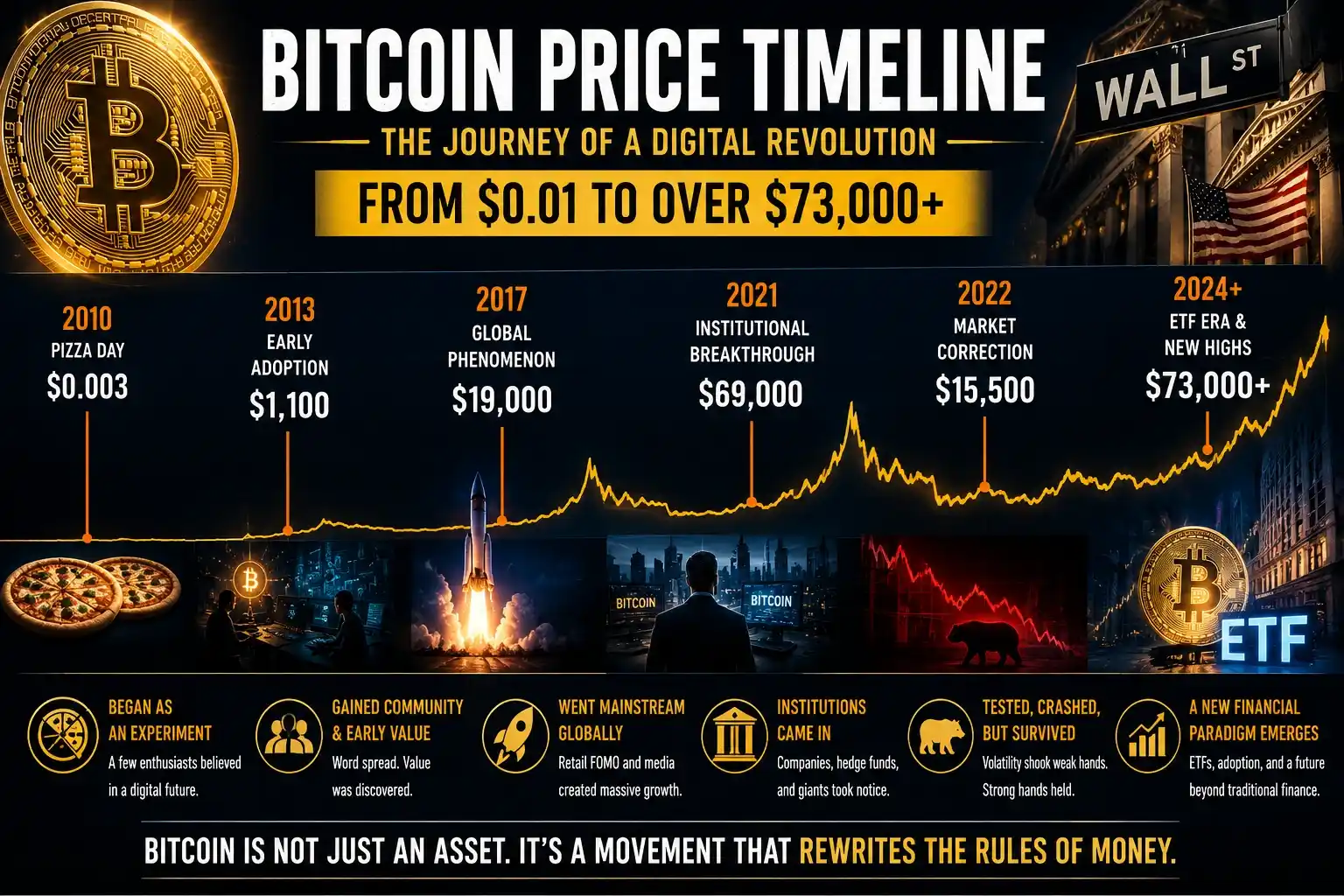
We measure these cycles in distinct eras. Each bull run brought in a new wave of capital, followed by a brutal market correction that tested the conviction of long-term holders. Below is the historical trajectory of this unprecedented asset.
Historical Price Timeline
| Market Cycle Era | Approximate Peak Price | Subsequent Low | Market Catalyst |
|---|---|---|---|
| 2011 Early Market | $32 | $2 | First media coverage, followed by early exchange failures. |
| 2013 Retail Discovery | $1,100 | $150 | Cyprus banking crisis and early venture capital interest. |
| 2017 Global Phenomenon | $19,000 | $3,100 | Initial Coin Offering (ICO) boom and mainstream news frenzy. |
| 2021 Institutional Tease | $69,000 | $15,500 | Pandemic stimulus, zero interest rates, and public company purchases. |
| 2022 Credit Contagion | N/A (Bear Market) | $15,500 | Central bank rate hikes and major platform insolvencies. |
| 2024+ ETF Era | $73,000+ | TBD | Bitcoin reached new all-time highs above $73,000 during the Spot ETF era. |
Major Crashes and Recoveries
| Drawdown Period | Percentage Decline | Recovery Duration |
|---|---|---|
| 2011 to 2012 | -93% | 20 Months |
| 2013 to 2015 | -86% | 37 Months |
| 2017 to 2018 | -84% | 36 Months |
| 2021 to 2022 | -77% | 28 Months |
Wall Street Surrenders: The Institutional Pivot
For the first decade of its existence, institutional finance treated Bitcoin as a reputational hazard. Prominent bank CEOs publicly called it a fraud. Wealth managers actively discouraged clients from buying it.
However, capital goes where the math makes sense. As the market capitalization swelled into the hundreds of billions, the financial industry could no longer ignore the client demand. The pivot was gradual, then sudden.
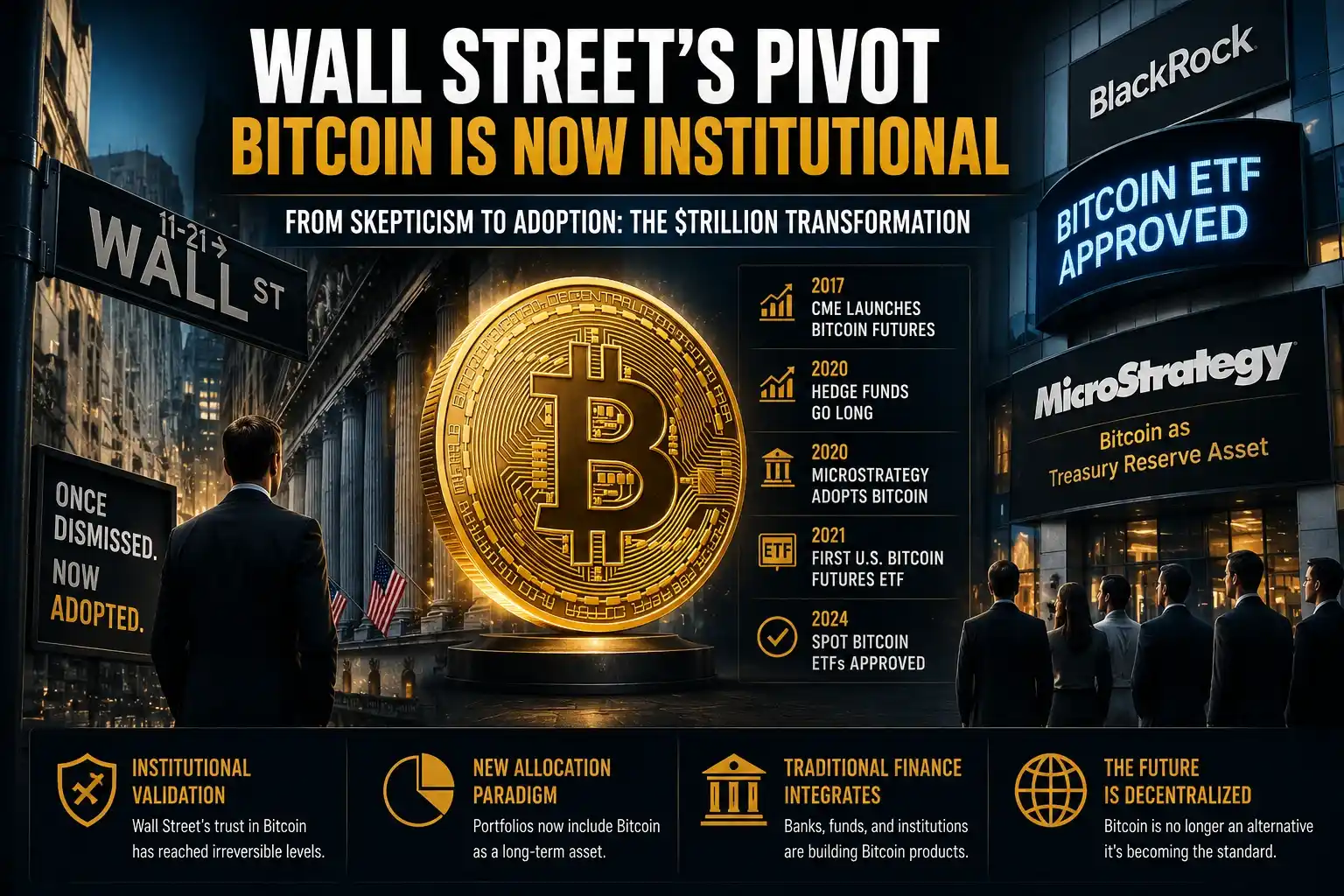
We saw major hedge fund managers break ranks and declare Bitcoin a legitimate inflation hedge. Then, software firm MicroStrategy shocked the corporate world by converting its corporate treasury reserves into the digital asset. The ultimate validation arrived when BlackRock, the world’s largest asset manager, filed for a Spot ETF.
The investors who once laughed at Bitcoin are now competing to offer it inside retirement portfolios.
🔥 Wall Street Intelligence Report: Wall Street Disconnect: Why Bitcoin Just Sprinted Past $80,000 Despite ETF Selling
Institutional Adoption Timeline
| Year | Institutional Milestone |
|---|---|
| 2017 | CME Group launches cash-settled Bitcoin futures. |
| 2020 | Prominent hedge fund managers endorse Bitcoin as a macro inflation hedge. |
| 2020 | MicroStrategy adopts the asset as its primary treasury reserve. |
| 2021 | First US futures-based ETF is approved. |
| 2024 | SEC approves Spot ETFs, unlocking Wall Street capital. |
Why This Matters Today: The 2026 Landscape
As we navigate the financial realities of mid-2026, the conversation around Bitcoin has fundamentally shifted. It is no longer viewed as a speculative tech experiment. It is now widely discussed as a recognized macroeconomic indicator.
The successful integration of Spot ETFs has allowed institutional capital to flow freely into the digital asset space. Wealth managers are now actively discussing appropriate allocation percentages for average retirement accounts, shifting the asset from the fringes of finance into traditional 401(k) and IRA portfolios.
This integration is happening against a backdrop of historic global debt. With national deficits expanding and central banks balancing interest rates against persistent inflation, fixed-supply assets are experiencing sustained institutional demand. Wall Street now treats Bitcoin as a structural reality rather than a passing trend.
📈 Macro Market Update: Bitcoin and Ethereum Stall as Wall Street Awaits Major Crypto Policy Shift
Bitcoin vs. The US Dollar: The Battle Over Purchasing Power
To understand the value proposition of Bitcoin, we must examine the fundamental flaw in traditional fiat currency. The US Dollar, like all modern currencies, is backed by government decree. Central banks can, and do, expand the money supply infinitely.
When the money supply expands faster than economic output, the purchasing power of the currency declines. This is inflation. Over decades, this monetary debasement quietly erodes the wealth of everyday savers.
Bitcoin was engineered to be the exact opposite. Its supply is strictly limited by mathematical code. This fixed supply schedule is what leads macro strategists to compare it to physical gold. Both are outside forms of money that no single government can print on demand.
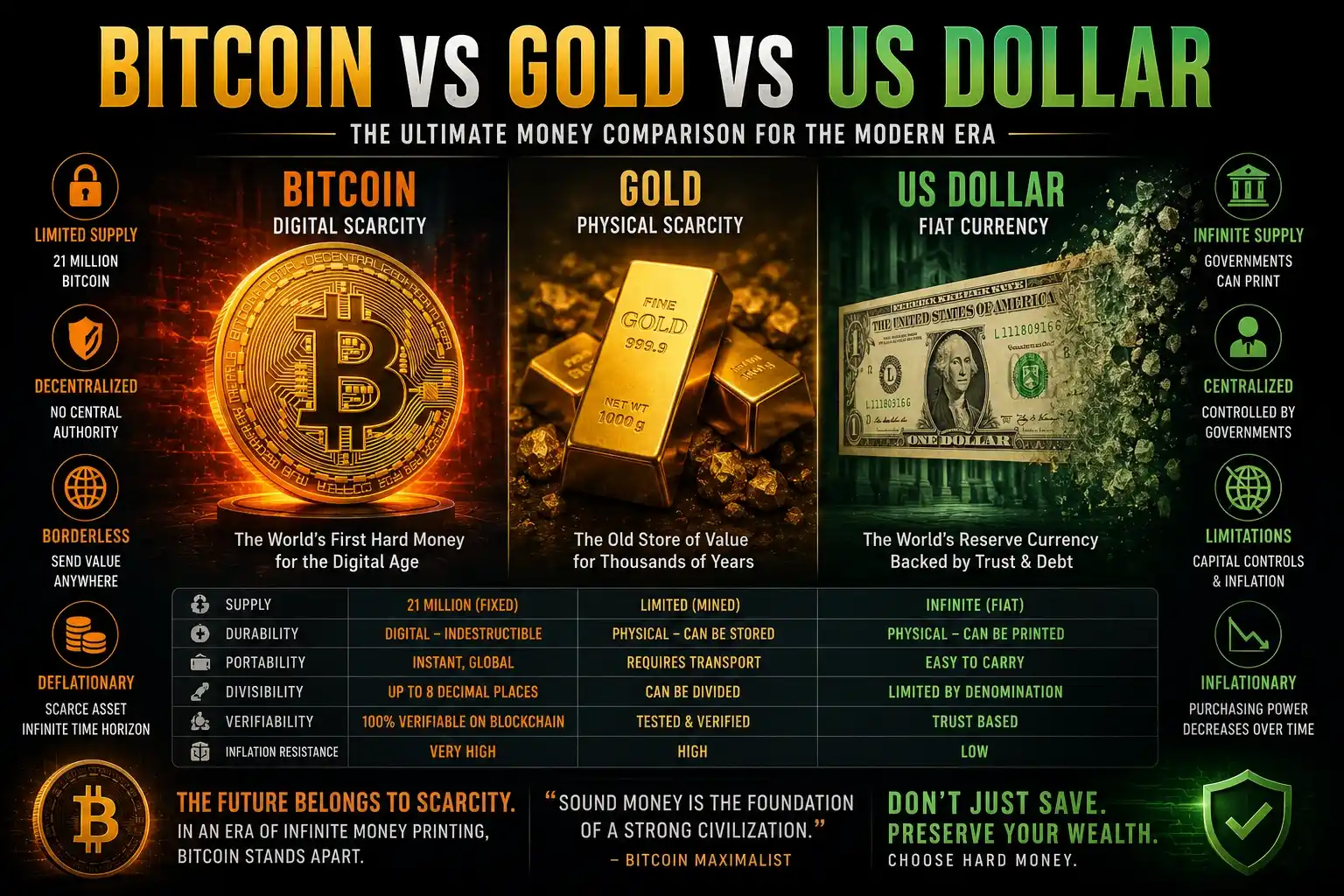
Asset Comparison: Bitcoin vs Gold vs US Dollar
| Feature | Bitcoin | Gold | US Dollar |
|---|---|---|---|
| Maximum Supply | Fixed (21 Million) | Unknown (Limited by Earth’s crust) | Unlimited |
| Issuance Control | Algorithmic | Mining Discoveries | Central Bank Policy |
| Portability | Instant, Global | Heavy, Difficult to transport | Digital/Physical, Restricted |
| Auditability | 100% Transparent | Requires trusted third parties | Opaque |
Impact on the Global Economy
The economic impact of Bitcoin extends far beyond Wall Street trading desks. In emerging markets suffering from hyperinflation, it is not a speculative bet; it is a financial life raft. Citizens in countries with collapsing currencies use digital assets to preserve their savings.
In addition, Bitcoin is disrupting the global remittance market. Traditional cross-border money transfers involve high fees and take days to settle. The network allows value to cross global borders in minutes, with minimal friction.
This reality places immense pressure on the legacy banking system. When capital can move instantly without intermediaries, traditional financial institutions are forced to innovate or risk obsolescence. We are witnessing the largest transformation of digital finance in modern history.
The Machinery of Trust: Mining Explained Simply
One of the most confusing aspects of Bitcoin for beginners is “mining.” You can think of miners as the independent auditors of the network. Because there is no central bank to verify transactions, the network relies on a decentralized web of computers.
These computers bundle recent transactions into “blocks.” To add a block to the official ledger (the blockchain), miners must expend computing power to solve a complex mathematical puzzle. This process is called Proof of Work.
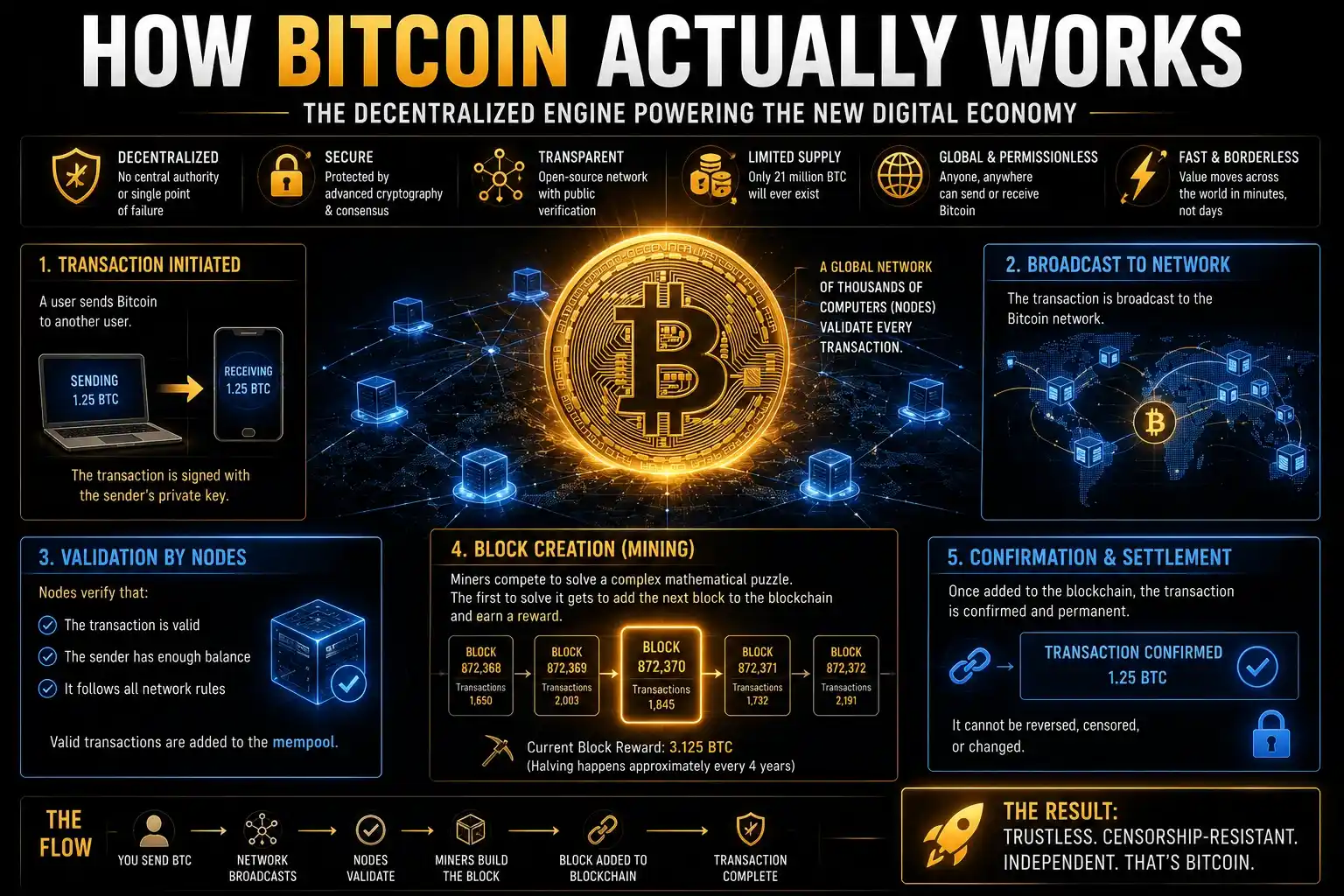
Why do miners spend massive amounts of electricity to do this? Because the network rewards them with newly created Bitcoin. This energy expenditure secures the network, making it mathematically impossible for any single entity to alter the transaction history.
The Law of Scarcity: Supply Shocks and Halvings
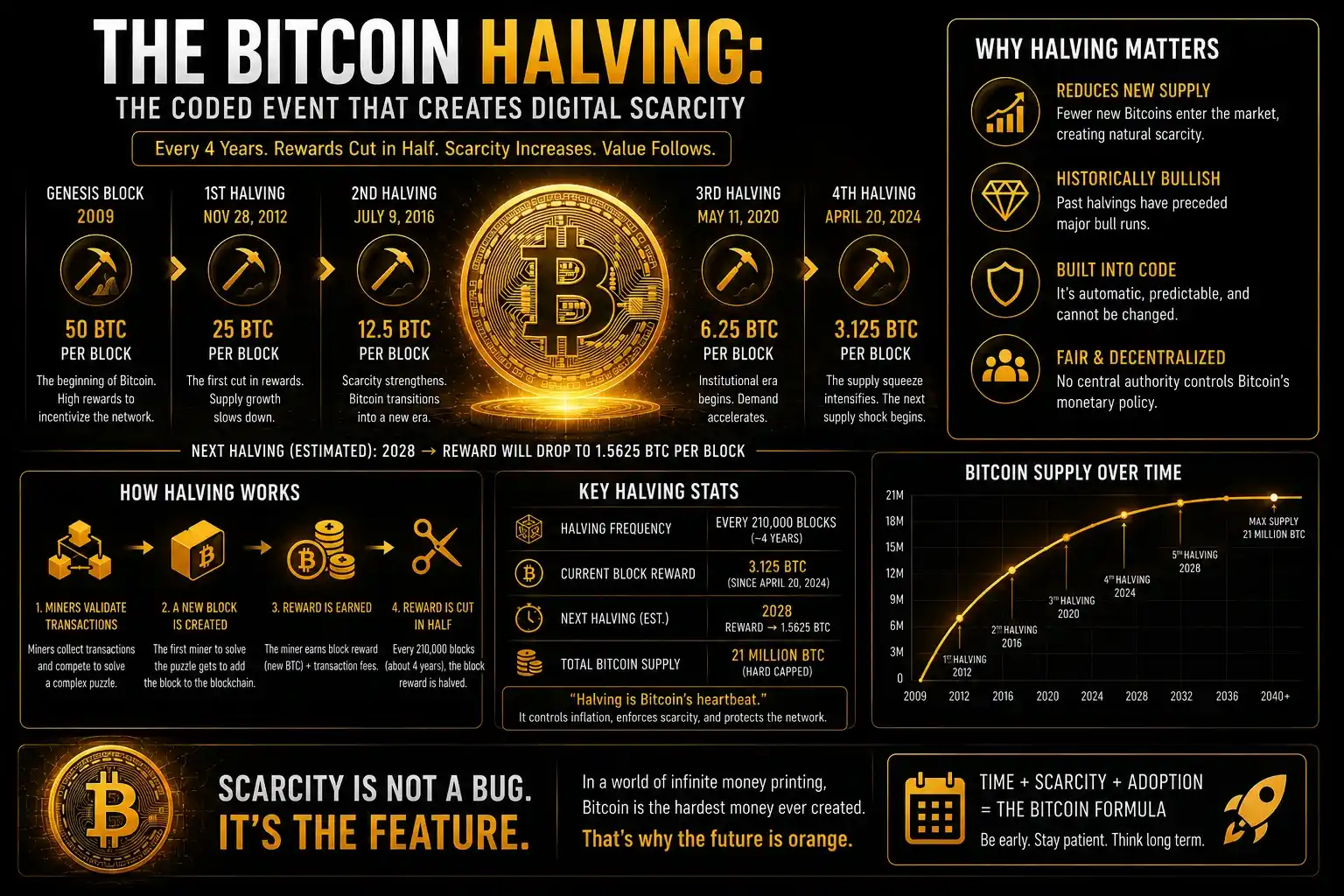
The foundation of the Bitcoin economic model is absolute scarcity. The software code dictates that there will never be more than 21 million coins in existence. No CEO or politician can vote to create more.
Every four years, the network undergoes an event known as the “Halving.” The amount of new Bitcoin rewarded to miners is automatically cut in half. This creates a predictable supply shock. Historically, these halving events have significantly impacted market psychology and price momentum.
Furthermore, analysts estimate that a meaningful portion of the supply may be permanently inaccessible. Early users forgot their passwords or discarded old hard drives before the asset had significant value. This means the actual available supply is far lower than the mathematical cap.
Supply Milestones
| Event | Network Milestone |
|---|---|
| 2009 | First 50 BTC mined (Genesis Block). |
| 2012 | First Halving (Reward drops to 25 BTC). |
| 2024 | Fourth Halving (Reward drops to 3.125 BTC). |
| 2140 (Estimated) | The last fraction of the 21 millionth Bitcoin will be mined. |
Who Actually Owns the Supply?
As the market matured, the distribution of Bitcoin ownership shifted dramatically. In the early days, ownership was concentrated among tech-savvy internet pioneers. Today, the landscape looks entirely different.
- Institutional Custodians: Exchange-Traded Funds (ETFs) now hold massive stockpiles on behalf of traditional investors and retirement accounts.
- Public Companies: Forward-thinking corporate treasuries hold tens of thousands of coins to hedge against fiat inflation.
- Governments: Nations hold Bitcoin in their national reserves, while others possess large sums seized from criminal operations.
- Retail Investors: Millions of everyday individuals hold fractions of a coin globally.
- The Creator: Wallets associated with Satoshi Nakamoto hold an estimated 1.1 million Bitcoin, which have never been moved or spent.
Understanding the Brutal Volatility
Mainstream investors are often terrified by the price swings of Bitcoin. To survive in this market, you must understand why these violent corrections happen. Volatility is the price you pay for an emerging, unmanipulated global market.
Much of the severe volatility is driven by excessive leverage. In unregulated offshore markets, traders borrow heavy amounts of capital to multiply their bets. When the price moves against them, their positions are automatically liquidated, creating cascading sell-offs.
Bitcoin is also highly sensitive to macroeconomic pressure. When the Federal Reserve raises interest rates to combat inflation, capital becomes expensive. Investors pull money out of risk-on assets, leading to aggressive bear markets. Conversely, when central banks lower rates, liquidity floods back into the digital economy.
The Realities of Risk in Digital Assets
As a Wall Street veteran, I must emphasize that Bitcoin is not for the faint of heart. The potential upside is historic, but the operational and market risks are severe. Ignoring these risks is a fast track to financial ruin.
Risk Overview
| Risk Category | Explanation of Threat |
|---|---|
| Extreme Volatility | Prices can drop aggressively in a single day due to leverage wipeouts and shifting sentiment. |
| Custody Errors | If you lose the private keys to your digital wallet, your wealth is unrecoverable. No bank can reset your password. |
| Regulatory Shifts | Hostile government policies or sudden tax changes can severely impact regional adoption and market liquidity. |
| Security Breaches | The broader digital ecosystem has risks. Phishing sites and unauthorized asset transfers result in total losses for unwary users. |
The greatest danger to retail investors is emotional panic. Buying at the absolute peak of a euphoric media cycle and panic-selling during the inevitable correction is how wealth is destroyed. A calm, long-term framework is essential.
🛡️ Essential Risk & Compliance Reading: Crypto Analytics and AI Compliance: Navigating the New Regulatory Landscape
Beginner-Friendly FAQ
Is Bitcoin legal?
Yes, in most major global economies, including the United States, buying, holding, and trading Bitcoin is completely legal. It is treated as property for tax purposes by the IRS. However, a few countries with strict capital controls have restricted or banned its use.
Can Bitcoin replace cash?
It is not currently suited to buy everyday items like a cup of coffee due to transaction fees and network processing times. Instead, the market treats it as a “store of value” settlement network, similar to digital gold, rather than a daily currency replacement.
Who controls Bitcoin?
No one, and everyone. Bitcoin is maintained by a global network of thousands of independent computers running the open-source software. Changes to the code require overwhelming consensus from the network participants. There is no central authority to subpoena or pressure.
Why is Bitcoin so volatile?
It trades 24 hours a day, 7 days a week, globally. It has no circuit breakers to stop trading during a panic. Combined with high-leverage trading and shifting macroeconomic winds, this creates rapid and severe price fluctuations.
Is Bitcoin safe?
The core network has never experienced a systemic compromise in its history. The cryptography is sound. However, the third-party platforms holding your assets can fail, and individual users can be tricked into giving away their access credentials. Self-custody requires strict personal responsibility.
How much Bitcoin exists right now?
Over 19.7 million coins have already been mined and are currently in circulation. The final fraction of the 21 millionth Bitcoin will not be mined until roughly the year 2140 due to the predetermined halving schedule.
Why does Bitcoin affect broader markets?
As Wall Street integrated the asset via ETFs and futures, it became tied to traditional liquidity cycles. When institutional investors need cash during a stock market panic, they often sell highly liquid assets first, creating cross-market correlations.
The Evolution of a Global Standard
We are witnessing a profound shift in monetary history. What started as an obscure cryptographic puzzle has matured into a structural pillar of the modern financial system. The initial skepticism of Wall Street was understandable, but holding onto that skepticism today requires ignoring the undeniable data.
Bitcoin changed finance forever because it proved that money does not require a government monopoly to function. It introduced absolute digital scarcity to a world navigating fiat currency expansion. That innovation cannot be un-invented.
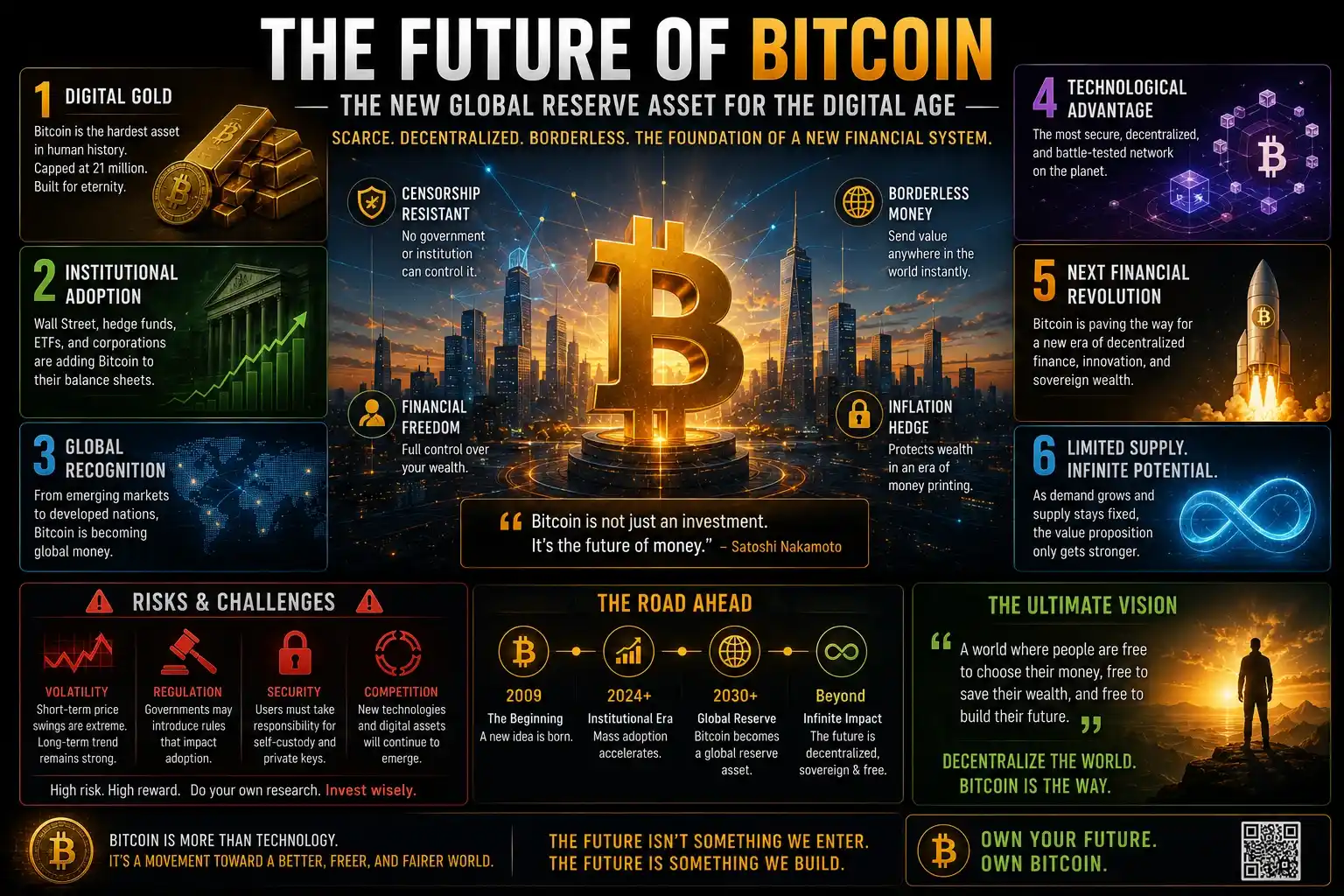
We do not know exactly what the future holds. The regulatory landscape will continue to shift, and macroeconomic volatility will test the resolve of investors again and again. However, Wall Street can no longer ignore the reality of decentralized value.
For everyday investors, the path forward requires diligent education. Treat this asset class with the respect and caution it demands. Understand the framework, manage your risk appropriately, and recognize that we are still in the early chapters of the digital financial revolution.
Sources & Research References
- Bitcoin Whitepaper by Satoshi Nakamoto (2008)
- Federal Reserve Economic Data (Macroeconomic Context)
- SEC ETF Filings & Approvals Data (2024–2026)
- Yahoo Finance Market Reports & Historical Price Charts
- CME Group Futures Data
Author: Financial Markets Desk
Coverage Areas: Bitcoin, Macro Trends, Wall Street, Institutional Finance, Digital Assets
Professional Financial Disclaimer
The information provided in this article is strictly for educational and informational purposes only. It does not constitute financial, investment, legal, or tax advice. Bitcoin and other digital assets are highly volatile and carry a substantial risk of loss. Past performance is never indicative of future results. The financial markets are unpredictable, and individuals should perform independent due diligence before making any financial decisions. You should always consult with a licensed and qualified financial professional to determine if digital assets align with your personal risk tolerance and investment objectives.
About the Author