Bitcoin Drops Below $80,000: The Derivatives Flush and How to Position Your Portfolio
By: Macro Finance Desk | Updated: May 8, 2026 | Category: Cryptocurrency & Global Markets
Data Citation: Market liquidation metrics and baseline figures corroborated by recent CoinDesk reporting.
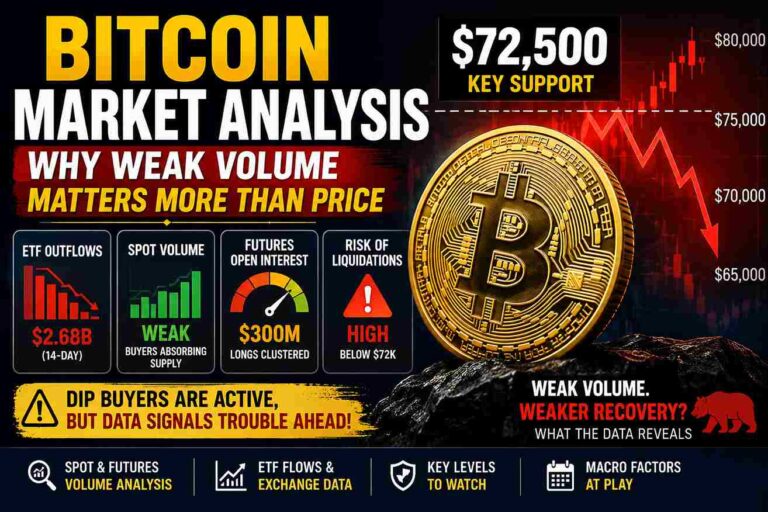
If you have been in the cryptocurrency markets long enough, you know days like today are standard operating procedure. In crypto, corrections often arrive much faster than investors expect. Over the last 24 hours, Bitcoin (BTC) broke below the heavily watched $80,000 support level. The immediate result was swift and brutal: over $300 million in futures bets were liquidated across major exchanges.
For newer retail investors, a sudden red candle of this magnitude feels like a panic event. Social media timelines fill with doom, and the sentiment shifts from extreme greed to fear in a matter of hours. But veteran crypto traders have seen this pattern many times before. From a purely data-driven perspective, this was a textbook market reset. It is a mathematical necessity that happens when a market becomes too heavy with borrowed money.
Looking at the raw exchange data, this pullback was not driven by long-term holders suddenly deciding to dump their spot assets. It was driven by the mechanics of the futures market clearing out over-leveraged traders. When everyone sits on one side of the boat, it eventually tips over.
This guide breaks down exactly what happened behind the scenes of this recent wipeout, the macroeconomic factors pulling the strings, and the practical capital allocation strategy you can use to navigate the current volatility. For a broader look at how traditional finance interacts with digital assets, check out our weekly guide to institutional market liquidity.
What Actually Happened? Decoding the Leverage Flush
To understand why Bitcoin dropped below $80,000 so aggressively, we have to look past the spot price and examine the derivatives market. Spot selling alone rarely causes these sudden vertical drops. The real driver is almost always the futures market.
The Mechanics of a Long Squeeze
In the weeks leading up to this event, market sentiment was running hot. Traders, expecting a quick sprint toward $90,000, piled into long positions. Many of these traders used perpetual futures contracts with high leverage—sometimes 10x, 20x, or even higher. Leverage gives you more buying power, but it severely limits your room for error.
If you use 10x leverage, a simple 10% drop in Bitcoin’s price will completely wipe out your initial margin. That is a liquidation.
Market data shows that open interest (the total number of active futures contracts) hit near-record highs just under the $80,000 mark. The market was top-heavy. When the buying volume finally slowed down and the price started to tick down toward $79,500, the first batch of highly leveraged traders hit their liquidation prices. Exchanges automatically closed their positions by executing market sell orders.
These automated sell orders pushed the price down even faster, which then triggered the next group of liquidations at $79,000. This chain reaction is called a “long squeeze.” In a matter of hours, it erased hundreds of millions from the market. It sounds chaotic, but structurally, it is just the market returning to a healthy baseline.
The Warning Sign: Elevated Funding Rates
You do not need a crystal ball to see these flushes coming; you just need to watch the funding rates. Funding rates are periodic payments made between traders to keep the price of a perpetual futures contract close to the actual spot price.
When the funding rate is highly positive, it means traders who are “long” (betting the price will go up) are paying a premium to traders who are “short” (betting the price will go down). Before this drop, annualized funding rates on several major exchanges were running exceptionally high. This told us one thing: the market was overcrowded with buyers using borrowed money.
When it costs that much to keep a long position open, smart capital usually steps back. They stop buying spot Bitcoin, wait for the inevitable leverage flush, and then step back in at lower prices. That is exactly the cycle we are seeing play out today.
The Macro Headwinds: Why Now?
Bitcoin does not trade in a vacuum. In 2026, it is deeply tied to the global macroeconomic environment. To build a solid buying strategy, we have to look at what is happening with traditional fiat currencies and bonds.
The US Dollar (DXY) and Treasury Yields
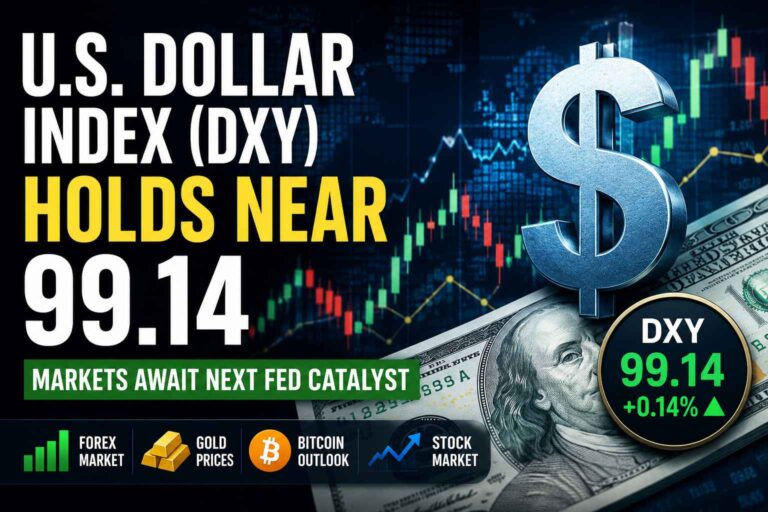
The biggest competitor to a non-yielding asset like Bitcoin (or gold, for that matter) is a high-yielding, risk-free government bond. Over the past week, the US Dollar Index (DXY) has shown a technical bounce. At the same time, the 10-year Treasury yield has crept up following inflation data that suggests central banks might keep interest rates “higher for longer.”
When Treasury yields go up, institutional portfolio managers adjust their risk models. If they can get a solid, guaranteed return from a US government bond, they automatically reduce their exposure to high-volatility assets. This routine institutional rebalancing creates a steady layer of sell pressure, which ultimately served as the catalyst for the futures liquidations we just witnessed.
Spot ETF Flows and Weekend Dynamics
Since the approval of spot Bitcoin ETFs, Wall Street’s plumbing is now directly connected to crypto. This brings massive liquidity, but it also brings traditional equity market hours to a 24/7 asset class.
Verified flow data showed slight net outflows from major Bitcoin ETFs in the days leading up to the $80,000 break. Wealth managers regularly rebalance portfolios at the end of the month. If Bitcoin had a strong quarter and grew to exceed its target weight in a client’s portfolio, the manager algorithmically trims the position. This is not panic selling; it is just standard portfolio maintenance. However, when this institutional trimming meets an over-leveraged retail futures market, you get a severe liquidation event. To understand this dynamic better, read our explainer on how ETF flows impact daily crypto volatility.
Technical Roadmap: Where is the Floor?
Now that the leverage has been cleared out, the focus shifts to finding logical areas for capital deployment. Using volume profiles and historical support levels, we can map out the most probable scenarios for the coming weeks.
| Support / Resistance Level | Market Significance | Historical Context |
|---|---|---|
| $81,500 – $82,000 | Overhead Resistance | Former support zone. Will now require strong spot volume to break back above. |
| $78,500 | Local Volume Node | Current battleground where short-term traders are attempting to establish a floor. |
| $74,200 | 50-Day Moving Average | A historically strong level where institutional limit orders tend to cluster during corrections. |
| $71,500 | Major Structural Support | The macro higher-low. A drop here would represent a full reset of Q2 sentiment. |
Looking at the data, the $74,200 level is a highly logical area to monitor. It aligns with the 50-day moving average and represents a healthy, standard percentage correction from the recent local highs. If macroeconomic conditions—like a sudden spike in inflation data—worsen, a quick wick down to $71,500 is entirely possible. In traditional market analysis, testing these lower bounds is often required to build a strong foundation for the next leg up.
The Capital Allocation Playbook
Trading a post-liquidation market is not about guessing the exact bottom. It is about removing emotion, managing your risk, and deploying capital systematically. Here is how experienced market participants generally approach a drawdown of this nature.
1. Position Sizing and Portfolio Context
Before you buy anything, you need to know your exposure limits. Bitcoin is volatile by design. It will routinely move 20% to 30% in a few weeks. Your portfolio needs to be sized so that these normal swings do not cause financial distress.
For a standard, diversified investment portfolio, a 1% to 5% allocation is typical. At a 5% allocation, even if Bitcoin drops 30%, your total portfolio only takes a 1.5% hit. That is easily manageable. Aggressive investors with longer time horizons might push this higher, but the core rule remains: never allocate more than you can comfortably hold through a multi-month drawdown.
2. Execution Strategy: Averaging In
Trying to “buy the dip” perfectly with a single, large purchase is a fast track to frustration. The market can always go lower than you think. Instead, the standard method is to average your way into the market.
- Dollar-Cost Averaging (DCA): This is the simplest and most effective strategy for most investors. You buy a fixed dollar amount of Bitcoin on a set schedule (e.g., every Monday), regardless of the price. This naturally lowers your average cost during a downturn and completely removes the stress of trying to time the market.
- Limit Order Grids: If you prefer a more active approach, you can set a series of limit buy orders below the current price. For example, based on our technical table, you might place 30% of your available cash at $76,000, 40% at $74,200, and 30% at $71,500. If the market flashes down, your orders are filled automatically while you sleep.
3. Choosing Your Investment Vehicle
In May 2026, the infrastructure around Bitcoin is mature. You have multiple ways to gain exposure, and the right choice depends entirely on your personal tax situation and technical comfort level.
| Investment Vehicle | Best Suited For | Key Benefits | Primary Drawbacks |
|---|---|---|---|
| Spot Bitcoin ETFs | Traditional investors, retirement accounts (IRAs) | Easy tax reporting, familiar brokerage interface, no technical setup required. | Management fees, restricted to stock market hours, you don’t hold the underlying asset. |
| Self-Custody (Hardware Wallet) | Long-term holders, crypto natives | True ownership, no counterparty risk, 24/7 access. | Requires technical responsibility; losing your private keys means losing your funds. |
| Regulated Crypto Exchanges | Active traders, mid-term holders | Instant liquidity, advanced trading tools, easy to cash out to a bank account. | Exchange risk (if the platform goes down or suffers a security breach, your funds are at risk). |
Risk Management: Protecting Your Downside
A good strategy isn’t just about making money when the market goes up; it is about protecting your capital when things go wrong. The recent liquidation event is a perfect reminder of why risk management is non-negotiable.
The Danger of Leverage
The traders who lost their capital today were mostly using leverage. When you borrow money to trade an asset that routinely swings 10% in a day, you are playing a very dangerous game. For 99% of investors, the spot market (buying the actual asset with cash you have) is the only place you need to be. Leave the 20x futures contracts to the algorithms and high-frequency trading firms.
Custody and Security
If you choose to buy spot Bitcoin, how you store it matters. Leaving large amounts of crypto on an exchange introduces counterparty risk. If you are holding for the next several years, transferring your assets to a multi-signature hardware wallet is the industry standard. It takes your assets offline, making them immune to exchange vulnerabilities. If you are new to this process, review our step-by-step guide to setting up secure digital custody.
The Macro View: Looking Past the Noise
It is easy to get caught up in the hourly charts, but zooming out provides much-needed perspective. The fundamental metrics of the Bitcoin network have not changed because the price dropped a few thousand dollars. The network hash rate remains near all-time highs, proving that miners continue to secure the network regardless of short-term price action.
We are also still navigating the post-halving landscape. The reduction in new Bitcoin issuance fundamentally alters the supply and demand mechanics. Historically, the full impact of a supply shock takes many months to reflect in the spot price. The volatility we are experiencing in Q2 2026 is completely normal. It is the necessary process of transferring coins from short-term, leveraged speculators to long-term, spot-driven buyers.
Markets need to breathe. A rapid ascent to new highs without occasional corrections creates unstable, fragile market structures. This flush reset the funding rates, cleared out the excess greed, and built a much healthier foundation for whatever price action comes next.
Frequently Asked Questions (FAQs)
1. Why did the price drop so fast?
The speed of the drop was caused by futures liquidations. When the price started to slip, traders who borrowed money to bet on the price going up had their positions forcibly closed by the exchanges. These automatic sell orders created a snowball effect, pushing the price down further and faster than regular spot selling would.
2. Is the 2026 bull cycle over?
Historically, bull markets experience multiple 20% to 30% corrections along the way. A drop below $80,000, while sharp, is well within the normal volatility parameters for Bitcoin, especially following the structural changes of the recent halving event.
3. Should I sell now and try to buy back lower?
Trying to time the market by selling a dip to buy back lower is notoriously difficult and often results in losing your position. A safer, more common strategy is to hold your core position and use dollar-cost averaging to buy incrementally as the price drops.
4. What exactly does a “funding rate” tell me?
It tells you the mood of the derivatives market. When the funding rate is very high, it means the market is overly greedy—too many people are paying high premiums to borrow money to buy. High funding rates are usually a warning sign that a sharp correction is coming to clear out the excess.
5. How do interest rates affect Bitcoin?
Bitcoin is highly sensitive to the cost of borrowing money. If the US Federal Reserve keeps interest rates high, investors can get solid, risk-free returns from government bonds. This makes volatile assets like Bitcoin slightly less attractive to large institutional funds, which can suppress the price.
Final Thoughts
Financial markets are incredibly efficient at moving capital from impatient traders to patient investors. The drop below $80,000 and the resulting liquidation event is a stark reminder of how quickly leverage can work against you.
For the disciplined investor, this isn’t a moment to panic. It is a moment to look at the data. The market has deleveraged itself, funding rates have reset to normal levels, and we are left with a much cleaner chart. By managing your risk, avoiding leverage, and using systematic methods like dollar-cost averaging, you can navigate these corrections calmly and rationally.
Want to stay ahead of the macro trends? Join our free weekly market newsletter. We send clear, data-driven updates on global liquidity, crypto metrics, and macroeconomic shifts straight to your inbox every Friday morning.
Disclaimer: This article is provided for informational and educational purposes only and does not constitute financial, investment, or trading advice. Cryptocurrencies are highly volatile assets. Always do your own research and consult with a certified financial professional before making investment decisions.
About the Author